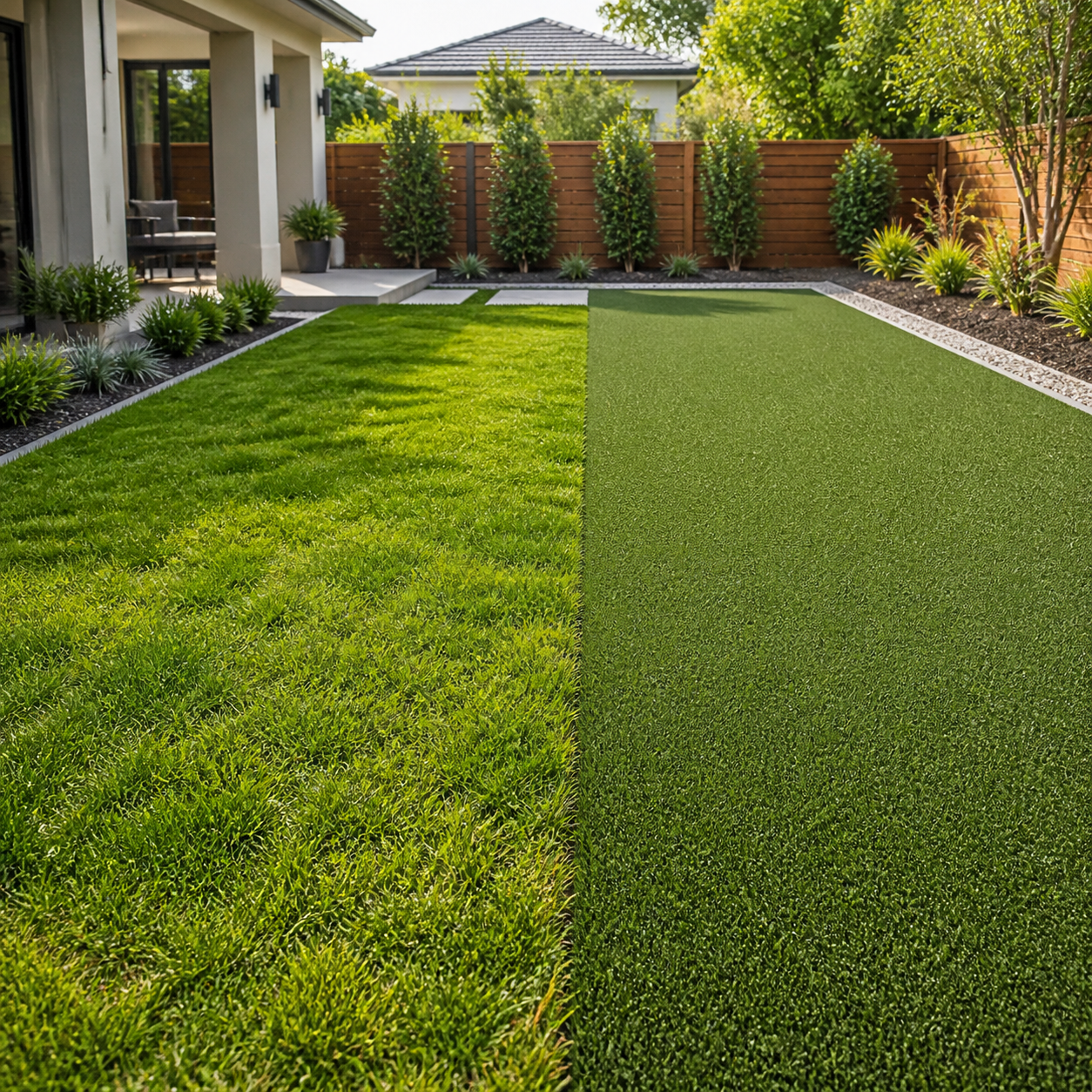
If you have been comparing lawn options online, you have probably seen "turf" used for two very different things: rolls of living sod and rolls of synthetic grass. That is not a mistake. Turf can mean either surface, although homeowners shopping for a low-maintenance lawn usually mean artificial turf.
The difference matters because the installation, upkeep, and cost are nothing alike. Natural turf grows in soil. Artificial turf is a manufactured surface installed over a prepared base or compatible hard surface. One needs mowing and plant care. The other needs sound drainage, secure edges, and routine cleaning.

What people mean when they say turf
The surrounding words usually reveal which kind of turf someone means.
| Term | What it usually means |
| Turf | A managed grass surface, either natural or artificial |
| Turfgrass | Living grass species grown for lawns, parks, golf courses, or sports fields |
| Artificial turf or synthetic turf | A manufactured grass-like surface made with synthetic fibers and backing |
| AstroTurf | A synthetic turf brand name that people sometimes use for the whole product category |
If the conversation includes sod, soil, seed, mowing, or fertilizer, the subject is probably natural turf. Words such as backing, infill, pile height, drainage holes, and rolls point to artificial turf.
That is enough terminology for most homeowners. The more useful question is what each surface asks of the yard and the person who has to maintain it.
Natural, artificial, or hybrid turf?
Natural turf is living grass rooted in soil. It feels familiar and usually stays cooler in hot weather through plant moisture and evaporation. It can repair minor wear by growing, provided the grass receives enough sunlight, water, nutrients, and time.
It also keeps a schedule. Mowing, irrigation, fertilizing, weed control, and seasonal repair are part of the deal. A shaded corner may thin out. Heavy traffic can turn a play area muddy. Drought restrictions can make a thirsty lawn difficult to justify.
Artificial turf trades that plant care for a different set of responsibilities. Synthetic blades are attached to backing and installed as part of a system that may include base material, drainage, infill, edging, and padding. It stays green without mowing or routine irrigation, but leaves still land on it, pet areas still need cleaning, and fibers can flatten under traffic. Direct sun can make the surface hot.
Hybrid turf combines living grass with synthetic reinforcement. It is useful on high-use professional sports fields, where the artificial fibers help stabilize the playing surface. Because the visible grass is still alive, hybrid turf needs mowing, watering, and plant care. It is rarely the practical choice for a normal backyard.
| If you care most about... | A sensible starting point |
| Living grass and a naturally cooler surface | Natural turf |
| Less mowing and a surface that tolerates repeated use | Artificial turf |
| Professional sports performance with living grass | Hybrid turf |
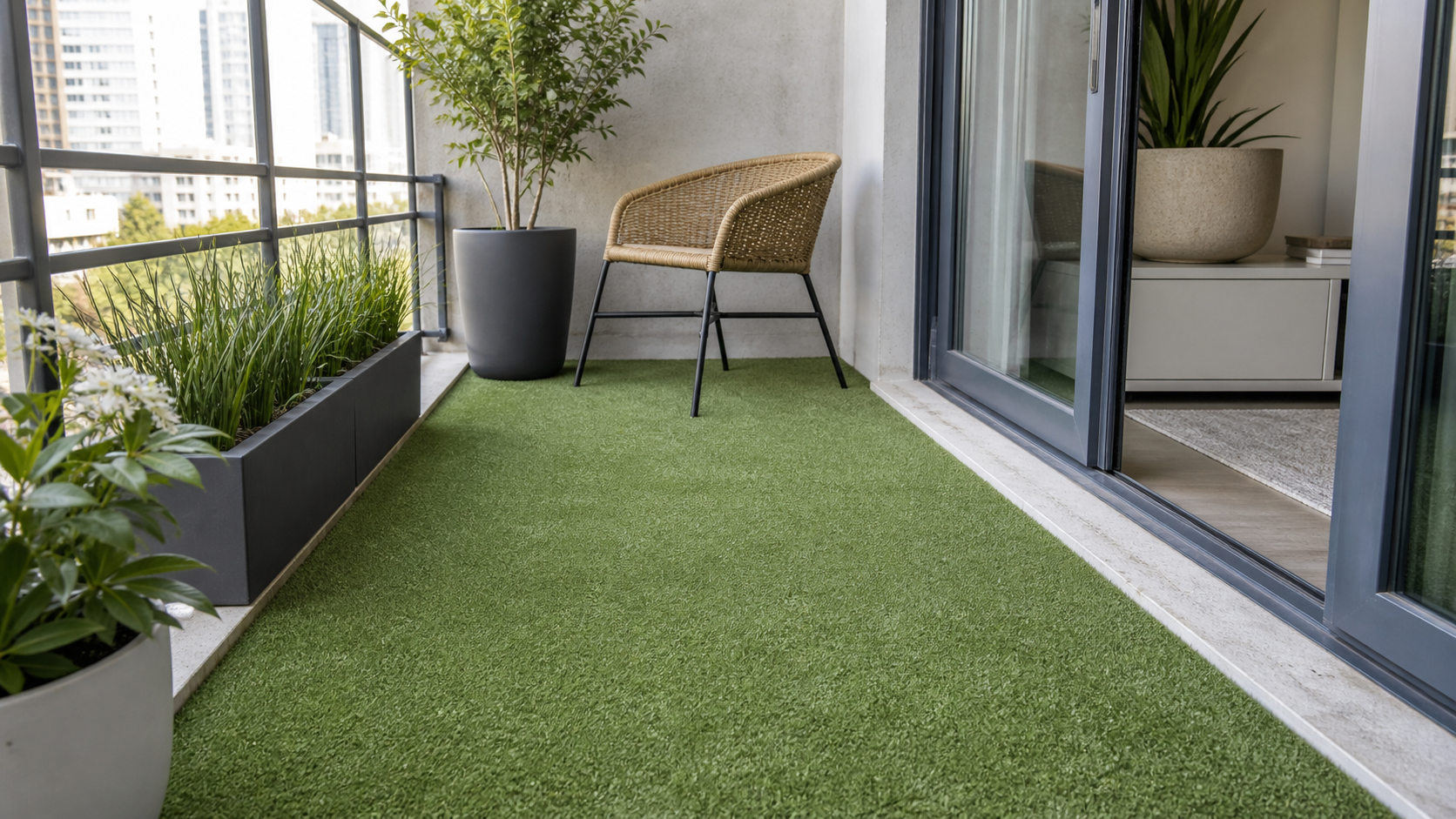
| A dog run, balcony, putting green, or area where grass struggles to grow | Artificial turf designed for that use |
Artificial turf is not automatically the better surface. Natural grass is not automatically the more authentic choice. Shade, drainage, traffic, water use, pets, and the amount of maintenance you will actually do should make the decision.
For a closer comparison of the common terms, read LITA's guide to artificial grass vs turf.
What is artificial turf made of?
The green blades are only the visible part. A landscape turf installation normally has several layers, and each one affects how the finished yard feels and drains.
The face fibers form the blades. Polyethylene is common in residential turf because it can feel softer while handling normal foot traffic. Polypropylene appears in some blades, thatch, and backing components. Nylon is firm and wear resistant, but it can feel stiffer and cost more.
A technical guide from Sport and Recreation Victoria describes artificial turf as a woven, knitted, or tufted carpet made with colored polypropylene, polyethylene, or nylon fibers that simulate natural grass.
The backing holds those fibers in place. Some products use perforations, while others use permeable construction to move water through the turf. Below it, a properly graded and compacted base keeps the surface even and gives water somewhere to go.
Many installations also use infill between the blades. Infill adds weight, helps support the fibers, and changes surface performance. The amount and type should follow the turf manufacturer's recommendation. More infill is not automatically better.

Choose turf by use, not pile height alone
At LITA, we sort turf by how the space will be used. Pile height is useful, but it should not make the decision by itself. A taller turf can create a fuller lawn appearance, yet it would be a poor choice for a putting surface. A soft product may feel good in a sample, but a pet area also needs a drainage and cleaning plan.
The table below shows how that thinking applies to current LITA products.
| Project | What to look for | LITA examples | Why they fit the conversation |
| Front yard or everyday residential lawn | Lawn-like appearance, comfortable feel, appropriate density and backing | 1.38 inch Standard Artificial Grass, 35 mm pile, currently $2.80 per sq ft | The 1.38 inch height gives a more familiar lawn profile without moving into the longest landscape pile |
| Fuller backyard or premium landscape | Softer, deeper lawn appearance, with enough density and support for the expected traffic | LITA Landscape Turf options from 1.5 to 1.77 inches | Better suited to customers who prefer a plush appearance and accept more brushing and debris care |
| Pet area or compact dog run | Easy cleaning, a manageable pile, compatible drainage backing, and an odor-control routine | 0.7 inch Full Green, 18 mm, and 0.8 inch Artificial Grass, 20 mm, both currently $2.10 per sq ft | The lower pile is easier to inspect and clean than a deep lawn-style surface. Confirm backing and drainage for the exact installation before ordering |
| Backyard putting green | Short, consistent pile over a smooth and firmly compacted base | 0.4 inch Artificial Grass or 0.47 inch Golf Artificial Grass | These low-profile options are designed around a compact practice surface rather than a plush lawn look |
These are starting points, not universal prescriptions. A 0.8 inch product placed on a patio behaves differently from the same roll installed over a prepared aggregate base. A pet yard in a dry climate may need a different cleaning routine from one that receives frequent rain.
The safest way to narrow the choice is to compare samples in the place where the turf will be used. Look at the color in sun and shade. Bend the sample to inspect the backing. Run water through it if drainage matters. A product photo cannot answer those questions.

Where turf projects usually go wrong
A turf project can look good on installation day and still develop problems later. The visible turf is not always the cause.
Standing water often points to grading, base, or drainage problems. If water already collects in the yard, covering the area does not make that problem disappear. The route for water should be planned before the roll is cut.
Wrinkles and dips usually begin below the surface. Loose soil, uneven excavation, or a poorly compacted base can move after installation. More nails will not repair a base that is settling.
Visible seams often come from rushed layout work. Every piece should face the same pile direction, and seams should avoid the most obvious sight lines when possible. Cutting several pieces before checking the grain is an expensive mistake.
Pet installations fail for a different reason. Owners may focus on softness and color, then discover that urine reaches a surface underneath that is difficult to rinse. The turf, base, drainage path, and cleaning routine have to work together.

What to check before ordering
Measure the complete area and sketch the layout. Turf comes in fixed roll widths, so the measured square footage and the quantity ordered may differ. Curves, seams, and trimming create waste.
Photograph the site after rain if drainage is uncertain. Note whether the turf will go over soil, concrete, a deck, or another surface. Write down who will use it and how often. Those details are more useful than saying you want the "best" turf.
When comparing products, check:
- Pile height and density
- Face fiber and thatch material
- Backing construction and drainage method
- Recommended infill
- Roll width and pile direction
- Warranty terms and installation requirements
Review the LITA installation guide before deciding whether to install the turf yourself. A simple balcony or rectangular patio can be manageable. Excavation, grading, long seams, and drainage corrections deserve more caution.
Frequently asked questions
Why do Americans call artificial grass turf?
"Turf" already meant a prepared grass surface. As synthetic sports fields and artificial lawns became common, the same word became shorthand for the manufactured version. Context does most of the work.
Is AstroTurf the same as artificial turf?
AstroTurf is a brand of synthetic turf. People sometimes use the name generically, but artificial turf is the larger product category.
What is turfgrass?
Turfgrass means living grass species managed as a dense surface. Lawns, golf courses, parks, and natural sports fields use different turfgrass species according to climate and traffic.
Does artificial turf need maintenance?
Yes. It does not need mowing or fertilizer, but it still collects dust, leaves, pollen, and spills. Brushing helps lift flattened fibers. Pet areas need regular rinsing and a cleaning method compatible with the turf and surface underneath.
Can artificial turf be installed over concrete?
It can, provided the concrete is sound and water has a route to drain. The installation may need adhesive, secure perimeter finishing, and cushioning depending on how the area will be used. Trapping water between turf and concrete can create odor and maintenance problems.
Does artificial turf get hot?
It can become much hotter than natural grass in direct sun. Shade, lighter-colored fibers, local climate, and occasional cooling with water can affect surface temperature. Check the intended location before choosing turf for children, pets, or barefoot use.
See the turf before choosing it
A turf specification can narrow the search, but it cannot show how a color looks beside your house or how the fibers feel underfoot. Samples can.
Request a LITA sample and compare it in the actual space. Include the project dimensions, installation surface, expected traffic, and whether pets will use the area. Those four details give the LITA team a much better basis for recommending a product than pile height alone.


Leave a comment
This site is protected by hCaptcha and the hCaptcha Privacy Policy and Terms of Service apply.