Very thin artificial grass gets a bad reputation because people often assume "thin" means cheap, weak, or fake looking. Sometimes that is true. A thin turf with loose backing, sparse fibers, and poor drainage will not hold up well outside.
But that is not the whole story.
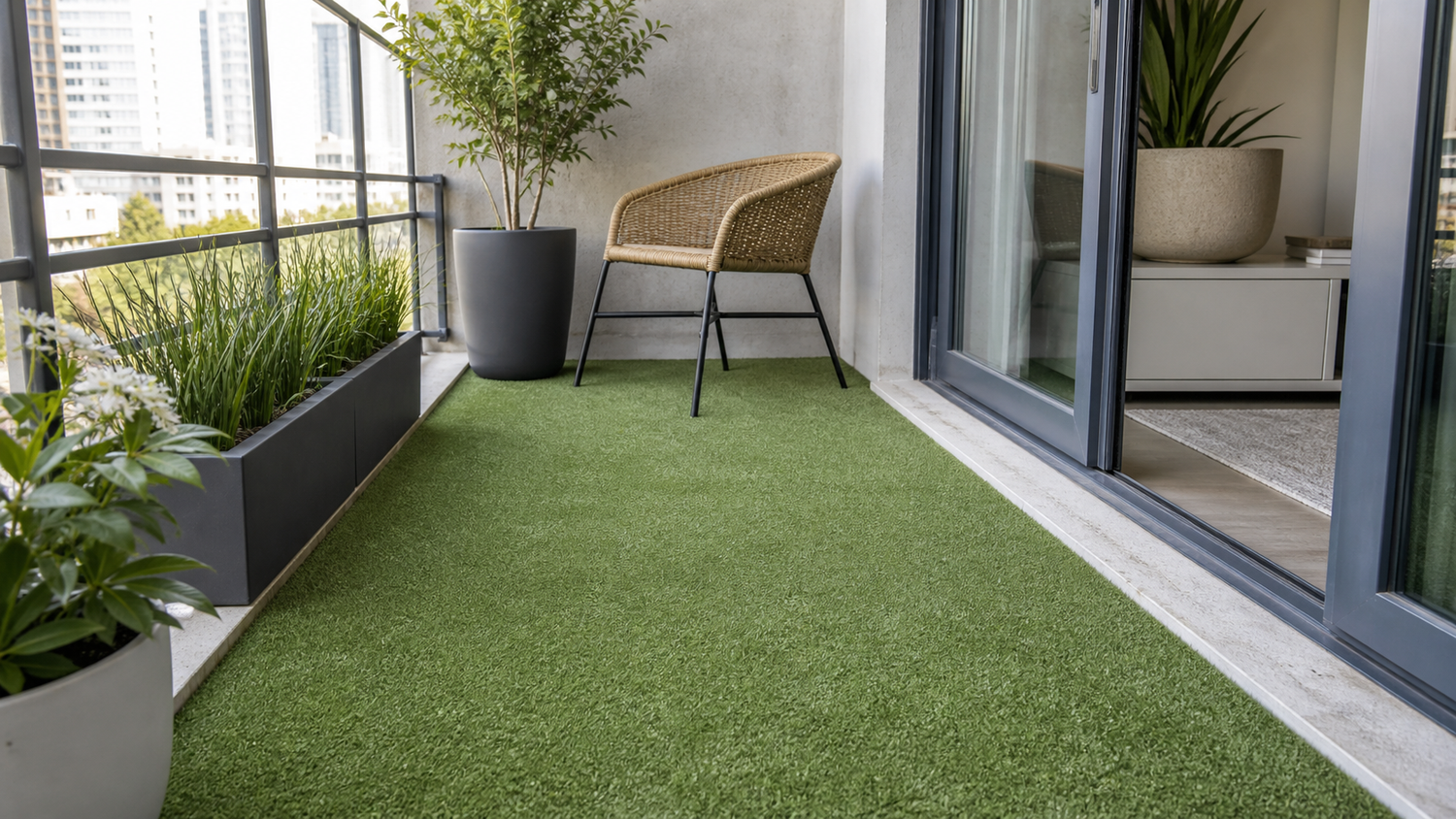
A low pile artificial grass can be the right choice when you need a flatter surface, easier door clearance, simpler cleaning, or a lighter roll that is easier to move and trim. It is especially useful on balconies, patios, decks, display areas, temporary event spaces, and indoor spots where a thick lawn style turf would feel bulky.
The trick is knowing what "thin" means before you buy. A short grass height is not the same thing as weak construction. A thin roll is not always the same thing as a low density roll. And a turf that works well as a balcony mat may be a poor choice for a pet potty area or a playground.
This guide walks through where very thin artificial grass makes sense, where it does not, and what to check before ordering.
What does very thin artificial grass mean?
When shoppers say "very thin artificial grass," they usually mean one of four things.
They may mean short pile height. Pile height is the visible grass blade height above the backing. A turf around 0.4 inch to 0.8 inch will look much flatter than a 1.38 inch or 1.77 inch landscape turf.
They may mean low face weight. Face weight measures the amount of yarn in a square yard, not counting the backing. Two products can have the same grass height but feel different if one has more yarn.
They may mean a thinner backing. Backing affects how the turf lays, drains, and holds together. A lighter backing can be easier to cut and move, but it may need better edge control.
They may mean the turf simply feels less plush underfoot. This is usually a mix of pile height, density, yarn type, and backing.
For example, LITA 0.4 inch Artificial Grass is a low pile option with a 0.4 inch grass height. LITA 0.47 inch Golf Artificial Grass is also short, but it is built for a different feel and use case. Both are "thin" compared with tall landscape grass, but they are not the same product.
That distinction matters. If you only shop by height, you may miss the turf that actually fits your space.
When very thin artificial grass works well
Low pile turf is useful when the surface has to stay practical. Not every project needs a deep lawn look.
Balconies are a good example. A thick, plush turf can make a small balcony feel crowded, especially near sliding doors or low thresholds. A thinner turf is easier to roll out, cut around rail posts, and clean with a broom or hose. If your project is a balcony or rooftop, it is worth reading LITA's guide to artificial grass for balconies and rooftops before choosing the final product.
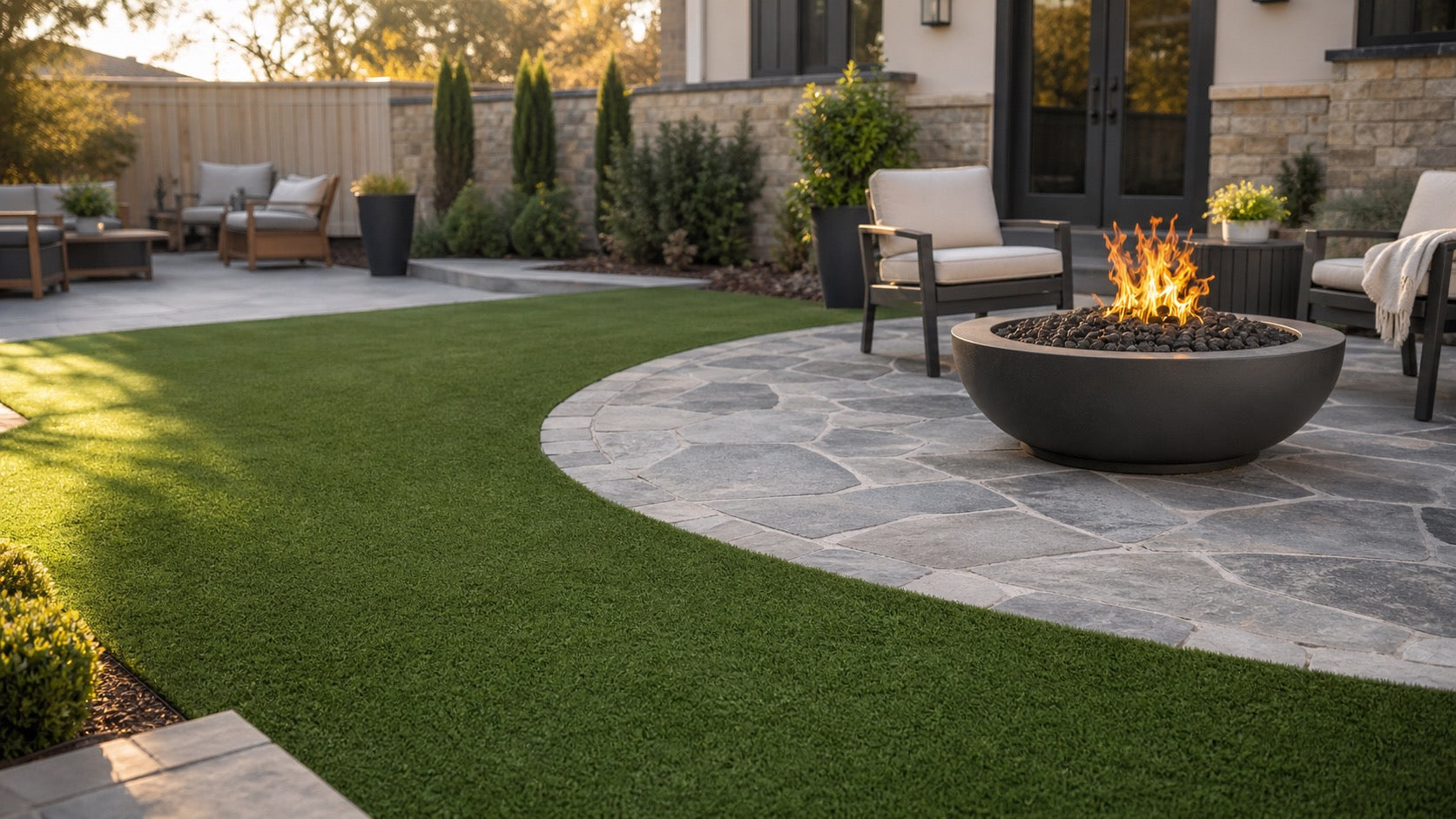
Patios and decks can also work well with thin turf, especially when the goal is to soften the look of concrete or cover a worn surface. You still need drainage, but you may not need a tall, lawn style blade.
Indoor spaces are another good fit. Short artificial grass can work in play corners, retail displays, trade show booths, shed floors, garage accent areas, or photography setups. It gives the visual cue of grass without bringing in the bulk of landscape turf.
Events are probably the easiest case. If the turf only needs to look clean for a few days, thin grass is easier to transport, cut, tape, and remove. LITA also has a separate guide on fake grass for events, which is useful if the installation is temporary.
Thin turf can also help when doors need to open cleanly. This sounds small until you install thick turf in front of a shed, patio door, or balcony entrance and realize the door drags across the surface every time.
When thin turf is the wrong choice
Very thin artificial grass is not a universal shortcut.
If you want a plush lawn feel, choose a taller and denser turf. Thin grass will not have the same cushion under bare feet. It can still look tidy, but it will feel more like a surface covering than a lawn.
If the area gets heavy pet use, be careful. Short turf can be easier to rinse, but pet areas need strong drainage, odor control, and enough structure to handle repeated cleaning. For that use case, start with LITA's guide to the best artificial grass for dogs or the guide on cleaning artificial grass dog urine.
For playgrounds, do not treat thin grass as safety surfacing by itself. Grass blades do not replace fall protection. The U.S. Consumer Product Safety Commission's Public Playground Safety Handbook focuses heavily on impact attenuation for playground surfacing. If children may fall from equipment, you need a system designed for that risk, often including padding under the turf. LITA's article on safety padding under artificial turf is a better starting point for that type of project.
Thin turf is also not ideal when the base is rough. A low pile product will show bumps, dips, seams, and sharp transitions more clearly than a taller grass. The flatter the turf, the more the base matters.

Thin vs thick artificial grass
Here is the simplest way to compare them.
| Feature | Very thin artificial grass | Thicker artificial grass |
|---|---|---|
| Look | Flatter, cleaner, more mat like | Fuller, more lawn like |
| Door clearance | Usually easier | Can drag near thresholds |
| Cleaning | Easier to sweep and rinse | May trap more debris in the pile |
| Comfort | Less cushion | Softer underfoot |
| Cutting and handling | Easier for small DIY projects | Heavier and harder to move |
| Best uses | Balconies, patios, events, displays, indoor areas | Yards, landscape areas, family lawns, pet runs |
| Base tolerance | Shows flaws more easily | Hides small imperfections better |
| Cost | Often lower per square foot | Often higher, depending on density and specs |
There is no winner in that table. The better choice depends on the job.
If you are covering a balcony floor that already drains well, thin turf may be the cleaner answer. If you are building a backyard lawn where kids will sit and play, a taller turf will usually feel better.
What to check before buying low pile turf
Start with pile height, but do not stop there.
A short grass height around 0.4 inch to 0.8 inch is usually what people mean by low pile artificial grass. That height can work well for tight spaces, but the product still needs enough density to avoid looking bald once installed.
Check the backing. For outdoor use, the turf should allow water to move through or off the surface. Drainage matters even on small patios because trapped water can lead to odor, mildew, or edge curling. If you are installing over concrete, read LITA's guide to artificial grass drainage before you start.
Check how the edges will be secured. Thin turf is easier to lift at corners if the edge is not held down. Depending on the surface, you may use turf tape, adhesive, staples, nails, or perimeter edging. For seam planning, LITA's article on artificial grass seam tape explains when tape makes sense and when adhesive is the better option.
Think about sun exposure. Artificial grass can get warm in direct sun, especially on hard surfaces like concrete, rooftops, and decks. Shade, lighter use hours, and rinsing can help, but no synthetic surface stays as cool as natural grass in every condition. If water conservation is part of your reason for choosing turf, the EPA's WaterSense outdoor guidance is a useful reference for thinking about outdoor water use more broadly.
Check the base. If the turf is going on soil, do not skip the base layer. If it is going on concrete, make sure the surface slopes away from the house and does not puddle. For yard installations, LITA's comparison of Class II base vs decomposed granite can help you avoid a base that shifts or holds water.
Best places to use very thin artificial grass
A balcony is one of the best uses. Thin turf keeps the profile low, which helps with doors, chairs, planters, and railing edges. It also makes cleaning easier because leaves and dust sit closer to the surface.
A small patio is another good fit. If the concrete is plain but in decent shape, low pile turf can make the area feel more finished without a full landscape project.
A deck can work if water can escape. Do not trap moisture between the turf and wood. Lift the turf occasionally, check the surface, and avoid installations that block airflow for long periods.

Indoor use is fine when the product fits the room. Short turf can work under a small golf practice area, in a mudroom, in a shed, or in a retail display. Use a non slip layer or secure the edges if people will walk across it often.
Events and trade shows are an easy yes. Thin turf is faster to handle, and the finished look is usually more important than long term softness.
For putting areas, low pile turf can be useful, but do not assume every thin turf is putting green turf. A putting surface needs the right speed, roll, and backing. If that is the goal, compare options in the putting green collection rather than buying only by grass height.

Installation tips for thin turf
Take more time on the base than you think you need. Thin turf does not hide mistakes. Sweep concrete first. Remove sharp debris. Fill deep cracks if they will show through. On soil, compact the base properly and avoid soft spots.
Plan your seams before cutting. Short turf can make a crooked seam more visible because the blades do not hide the line as much. Dry fit the pieces, check blade direction, and trim slowly.
Secure the perimeter. Loose edges are the fastest way to make a clean installation look temporary. On soil, stakes or nails may work. On concrete, adhesive or tape may be better. For a neater border, see LITA's guide to artificial turf edging options.
Do not block drainage. If water has nowhere to go, the turf will not perform well, even if the product itself drains. This matters most on balconies, rooftops, pool decks, and concrete patios.
Brush it after installation. Even low pile turf benefits from a quick brushing after it has been rolled up. It helps the fibers stand more evenly and makes the surface look less flattened.
How to clean and maintain thin artificial grass
Thin turf is usually simple to maintain. Sweep it for dry leaves, dust, and small debris. Rinse it when needed. For indoor use, a broom or light vacuum can work, depending on the product and backing.
For outdoor areas, check corners and seams after storms or heavy use. A thin piece can shift if it is not secured well. If the turf sits on a deck or concrete slab, lift an edge occasionally to make sure water is not sitting underneath.
For routine care, LITA's guide on how to maintain artificial grass all year round covers the basics.
Pet mess needs faster cleaning. Rinse urine quickly, remove solids before washing, and use a turf safe cleaner if odor lingers. Thin turf can be easy to rinse, but the base beneath it still matters.
Which LITA products fit the low pile use case?
For shoppers specifically looking for very thin artificial grass, start with short pile products.
LITA 0.4 inch Artificial Grass is the most direct match for the search term. It is a low profile option for areas where a thin surface is the point: balconies, displays, small patios, events, and spaces where door clearance matters.
LITA 0.47 inch Golf Artificial Grass is also short, and it can make sense for golf style or flatter surface needs. It should be chosen for the right use, not just because it is thin.
If you want more softness and a more traditional lawn look, move up to a taller product such as LITA 0.8 inch Artificial Grass or a fuller landscape turf. Thin is useful, but it is not always better.
FAQ
Is very thin artificial grass durable?
It can be durable if the backing, yarn, and installation are right for the use. Thin turf should not be judged by pile height alone. A low pile product in a light traffic balcony may last well, while the wrong product in a heavy pet area may wear quickly.
Is thin artificial grass good for dogs?
Sometimes, but pet areas need more than short grass. Drainage, odor control, and cleaning access matter more than height alone. For dog runs or potty areas, choose turf designed for pet use and plan the base carefully.
Can I use thin artificial grass on concrete?
Yes, if the concrete drains properly and the turf is secured so it does not slide or curl. Clean the surface first, check for puddles, and avoid trapping water under the turf.
Does thin turf drain well?
Drainage depends on the backing and the surface below it. A turf with drainage holes can still perform poorly if the concrete underneath has no slope or the soil base holds water.
Is low pile turf cheaper?
Often, but not always. A shorter turf may cost less because it uses less yarn, but price also depends on density, backing, material, roll size, and finish. Compare the full spec sheet, not just the pile height.
The bottom line
Very thin artificial grass is not the best choice for every project, but it has a real place. It is practical for balconies, patios, events, indoor displays, and tight spaces where thick turf would be harder to install or maintain.
Use it when you want a clean, low profile surface. Avoid it when you need plush comfort, playground fall protection, or a heavy duty pet system. If you match the turf to the job, thin artificial grass can look intentional instead of like a compromise.

Leave a comment
This site is protected by hCaptcha and the hCaptcha Privacy Policy and Terms of Service apply.