People use "artificial grass" and "turf" as if they mean the same thing. Sometimes they do. Sometimes they don't. That is why the search gets confusing so quickly.
In everyday shopping, artificial grass usually means synthetic grass made for homes, patios, balconies, dog runs, pool areas, and landscaping. Turf is a broader word. It can mean natural grass sod, synthetic sports turf, or artificial grass, depending on who is saying it. A landscaper, a soccer coach, and a homeowner may all use "turf" a little differently.
So if you are comparing artificial grass vs turf, the practical question is this: are you talking about a soft residential lawn surface, a high-use sports field, or real grass? The answer changes what you should buy, how much you will spend, and how much maintenance you should expect.
quick answer
Artificial grass is a synthetic grass product made to look like a lawn. Turf can mean either natural grass or synthetic grass. In home improvement searches, "artificial turf" and "artificial grass" are often used interchangeably, but "turf" is more common for sports fields and commercial installations.
For a backyard, dog area, balcony, or poolside space, look for artificial grass with the right pile height, drainage backing, blade shape, and infill plan. For a sports field or playground, the system matters more than the grass alone. You need to think about shock pads, infill, fall protection, heat, and maintenance.
what artificial grass means
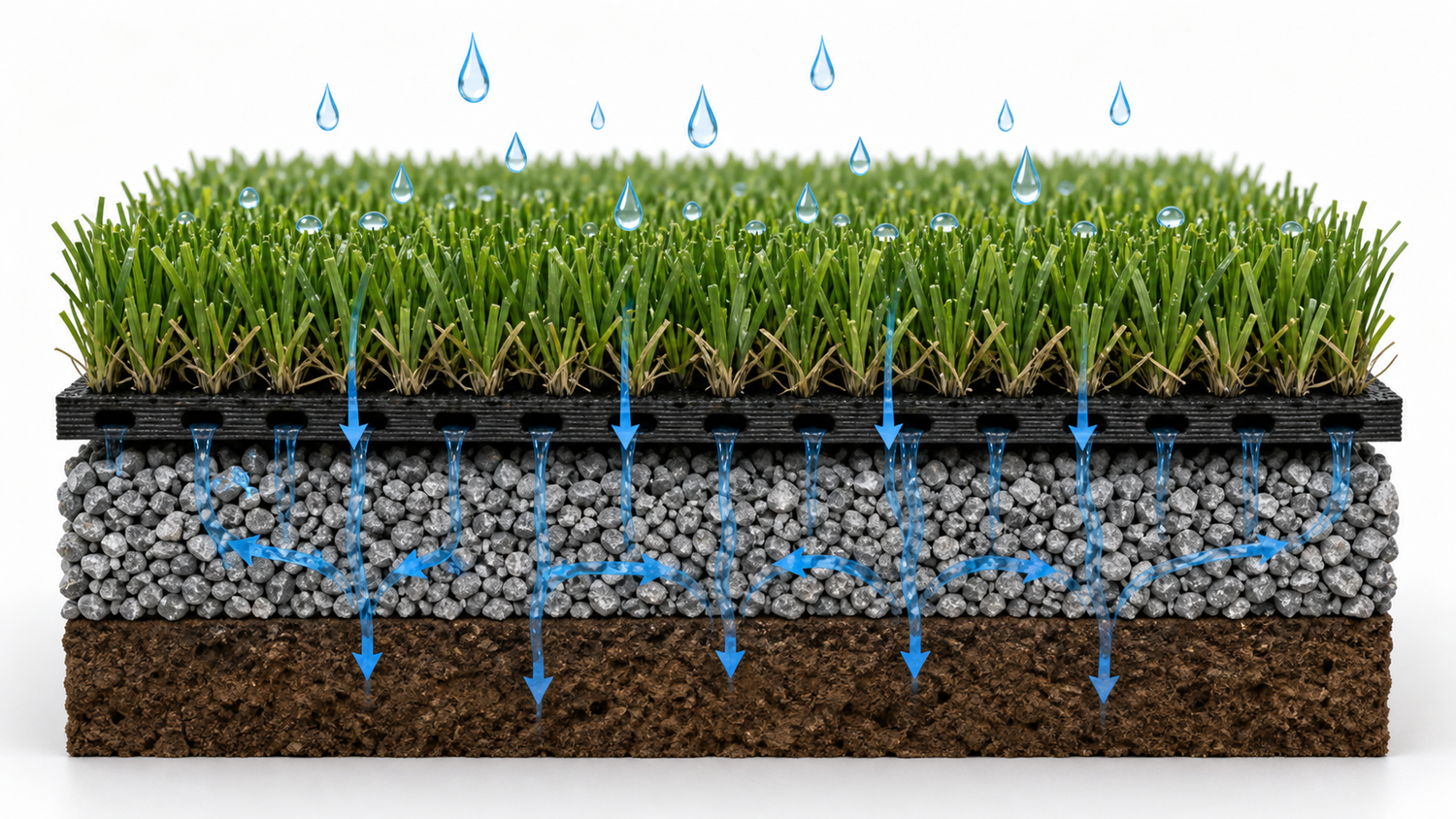
Artificial grass is made from synthetic fibers, usually polyethylene, polypropylene, nylon, or a blend. The blades are tufted into a backing, then the backing is coated so the grass holds together. Most residential artificial grass also has drainage holes so water can move through the surface into the base below.
The better products do not look like the old plastic carpet people remember from decades ago. Modern artificial grass uses different blade shapes, colors, thatch layers, and pile heights to look more natural. Some grass feels soft and springy. Some feels firmer and stands up better under traffic.
For most homeowners, artificial grass is used in places where real grass struggles: shaded yards, dry climates, muddy side yards, balconies, dog runs, rooftops, pool edges, and small spaces that are hard to mow.
If your main concern is a pet area, read LITA's guide on best artificial grass for dogs. Pet turf needs stronger drainage and easier cleaning than decorative lawn grass.
what turf means
"Turf" is the slippery word.
In lawn care, turf can simply mean natural grass grown as a managed surface. People say "turfgrass" when they mean grass species used for lawns, golf courses, and athletic fields.
In sports, turf often means synthetic turf. A football field, soccer field, or training area may use a full turf system with fibers, infill, padding, drainage layers, and a compacted base. That system is built for repeated impact and heavy use, not just appearance.
In retail, "artificial turf" usually means the same product category as artificial grass. A roll labeled artificial turf may work perfectly well for a yard, balcony, or dog run. The name alone does not tell you enough. You still need to check pile height, backing, drainage rate, face weight, material, warranty, and recommended use.
That is the main point: "grass" sounds residential, while "turf" sounds heavier duty. But the label is not a guarantee.
artificial grass vs turf in plain terms
Here is the cleanest way to separate the terms.
| Term | Usually means | Common uses | What to check |
|---|---|---|---|
| Artificial grass | Synthetic grass made to look like a lawn | Yards, patios, balconies, pets, pool areas | Softness, blade shape, drainage, pile height |
| Artificial turf | Synthetic grass, often used for heavier wear | Sports, dog runs, commercial areas, putting greens | Durability, infill, backing, shock absorption |
| Natural turf | Real grass lawn or sod | Lawns, parks, athletic fields | Water, mowing, soil, sunlight, repair needs |
| Synthetic turf | Another name for artificial turf | Sports fields, playgrounds, landscaping | Heat, infill type, drainage, maintenance |

If you are shopping for a home project, do not worry too much about whether the listing says grass or turf. Worry about whether it fits the job.
A soft 1.5 inch artificial grass may be great beside a patio but wrong for a putting green. A dense pet turf may drain well but feel too firm for a barefoot lounge area. A sports turf system may handle cleats but look too flat for a front yard.
which one looks more natural?
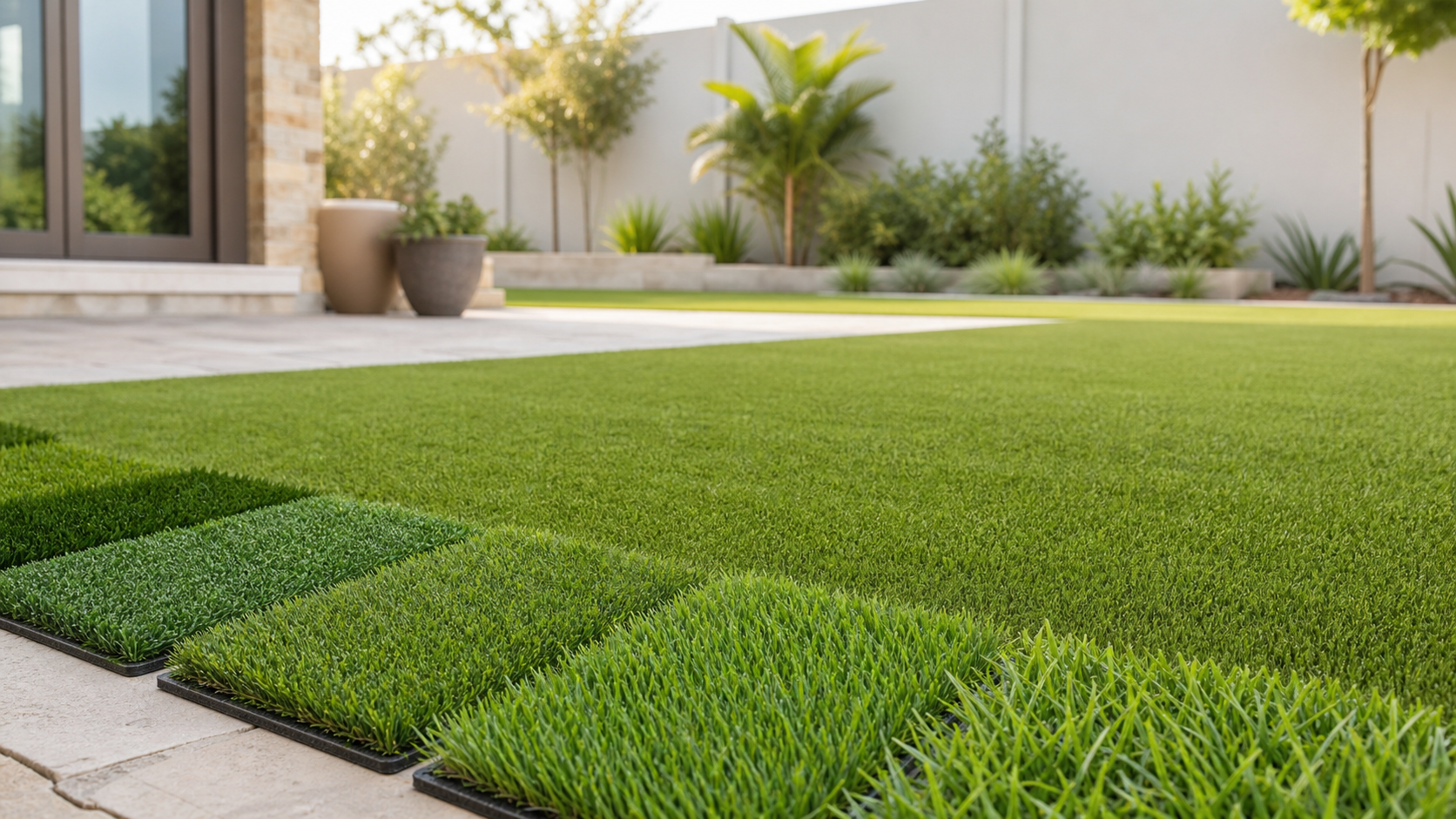
Residential artificial grass usually wins on appearance because it is designed for close-up viewing. The best lawn-style products mix blade colors with a brown or tan thatch layer, so the surface does not look like a single sheet of green plastic.
Sports turf has a different job. It needs to recover from foot traffic, cleats, dragging, and repeated play. It may use shorter or more uniform blades, more infill, and a firmer base. That can make it look less like a garden lawn, even when the material is high quality.
For front yards and landscape areas, choose artificial grass with moderate pile height and multiple tones. Very tall grass can look lush at first, but it may flatten if the fibers are not dense enough. Very short grass can look neat, but it may also look less natural unless the color and thatch are right.
For balconies and rooftops, go shorter and lighter. Drainage and weight matter more than a deep lawn look. LITA has a separate guide on artificial grass for balconies and rooftops if that is your project.
which one lasts longer?
The lifespan depends less on the word "grass" or "turf" and more on the material, backing, UV resistance, installation, and traffic.
A lightly used decorative lawn can last for years with basic cleaning. A dog run may wear faster because of urine, digging, and daily traffic in the same paths. A sports surface has a harder life and needs more routine grooming.
The base matters too. Poor installation can ruin a good product. If water sits under the turf, edges lift, seams open, or the base shifts, the surface will age badly. A stable base and working drainage do more for lifespan than a nice product photo.
For a deeper look at lifespan, see LITA's artificial grass durability guide.
maintenance is different, not zero
Artificial grass is lower maintenance than natural grass, but it is not maintenance free. That is where a lot of buyers get disappointed.
You do not mow it. You do not water it like a lawn. You do not fertilize it. But you still need to remove leaves, rinse dust, brush flattened areas, clean pet waste, and check seams or edges.
Pet areas need the most cleaning. Urine can pass through good drainage backing, but odor can remain in the turf or base if the area is not rinsed. For dogs, drainage holes, antimicrobial infill options, and a cleanable base matter more than a soft showroom feel. LITA's guide on cleaning artificial grass after dog urine covers the practical steps.
Sports turf needs grooming to keep infill even. Playground turf needs inspections because safety depends on the full surface system, not just the green fibers. The U.S. Consumer Product Safety Commission's Public Playground Safety Handbook discusses surfacing in the context of impact protection and maintenance.
drainage is one of the biggest differences
Good artificial grass should move water through the surface. But drainage is not only about holes in the backing. Water needs somewhere to go after it passes through.
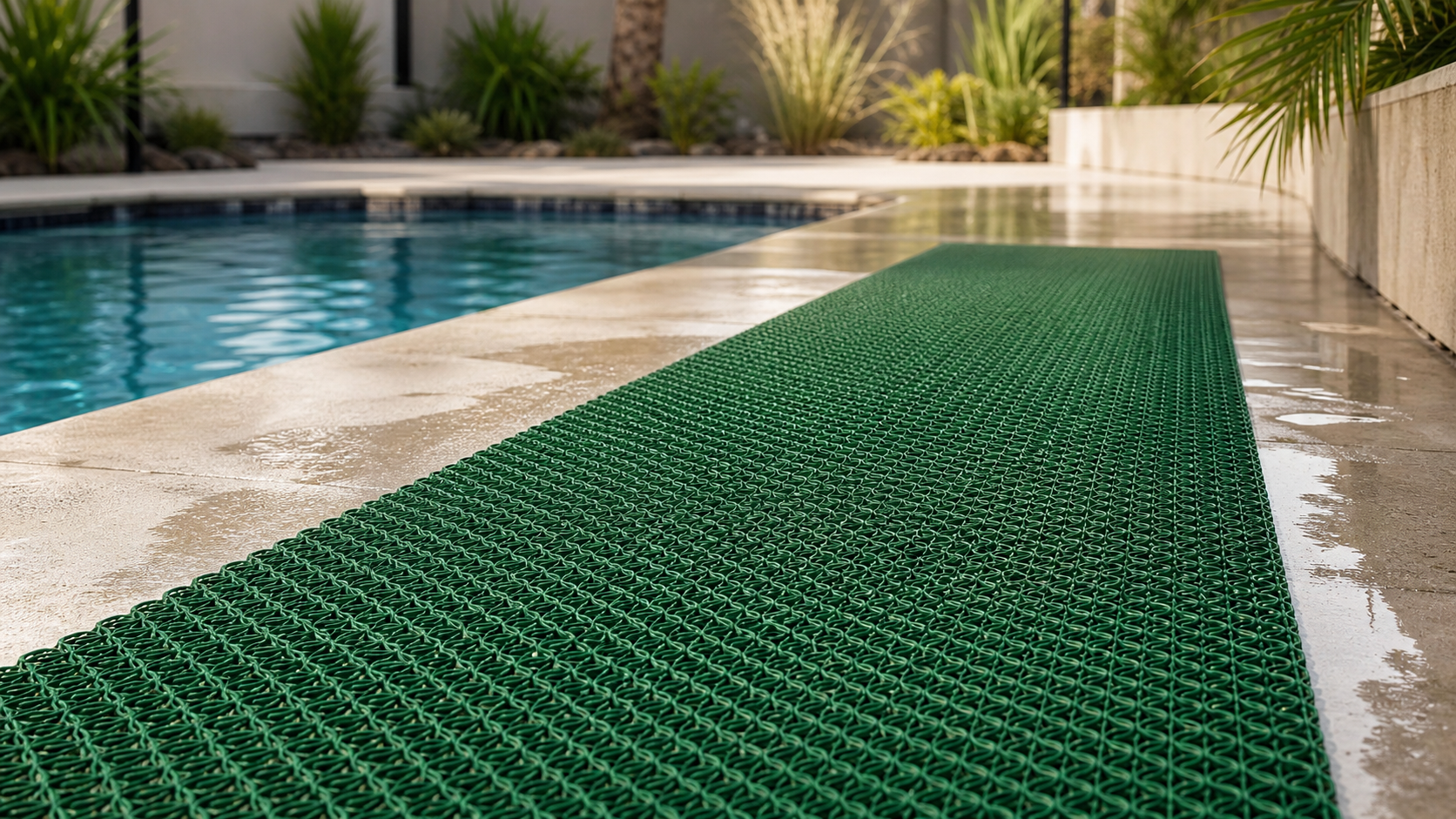
For a yard, that usually means a compacted aggregate base with a slight slope. For a balcony, it means the surface underneath must already drain properly. For a dog run, drainage also affects odor. For a pool area, drainage helps reduce puddles and slippery spots.

This is where some cheap turf fails. It may look fine in photos, but if the backing drains slowly or the base traps water, the surface becomes a problem after the first heavy rain or the first week of pet use.
If drainage is a concern, read LITA's guide on artificial grass drainage, bases, slope, and perforations.
heat is real
Artificial grass and synthetic turf can get hot in direct sun. Some surfaces heat up more than others because of fiber color, infill, density, air flow, and the base underneath. Shade, lighter colors, rinsing, and choosing the right infill can help, but no synthetic surface behaves exactly like living grass.
This matters most around pools, patios, dog areas, and play spaces. Bare feet and paws notice heat before your eyes do. If the area gets full afternoon sun, plan for shade or test the surface before letting kids or pets use it.
For pool projects, see LITA's pool artificial grass guide and how to keep turf cool.
what about safety and chemicals?
For most residential buyers, the biggest safety questions are heat, trip edges, drainage, and whether the product is suitable for kids or pets. For athletic fields and playgrounds, the discussion gets more technical because some systems use crumb rubber infill and impact-absorbing layers.
The EPA has researched recycled tire crumb used on playing fields and playgrounds. Its federal research page notes that tire crumb contains a range of chemicals and that exposure can occur, while its 2024 findings describe many measured exposures as limited in the field portion of the study. You can read the EPA summary here: Federal research on recycled tire crumb used on playing fields and playgrounds.
For a home lawn, you may not be using crumb rubber at all. Many residential installations use silica sand, coated sand, zeolite, organic infill, or no infill depending on the product and use. Ask what the turf is made of, what infill is recommended, and whether the product has testing documentation.
LITA also has a guide on non-toxic artificial grass for kids and pets.
cost: grass and turf can overlap
There is no reliable rule that "turf" costs more than "artificial grass." Product names are too loose for that.
Cost depends on fiber material, density, pile height, backing, drainage, UV resistance, infill, base preparation, labor, and project size. A simple balcony install may be inexpensive because the area is small. A backyard may cost more because of excavation, base work, seams, edging, and disposal. A sports or playground system can cost much more because it may need padding, specialty infill, testing, and professional maintenance.
If you are budgeting, estimate the full system, not just the roll price. The cheapest turf can become expensive if you have to redo the base later. For planning, start with LITA's guide on artificial grass cost per square foot.
which should you choose?
Choose lawn-style artificial grass if you want a natural-looking yard, patio, balcony, rooftop, or decorative area. Look for a realistic color mix, comfortable texture, enough density, and drainage that matches the space.
Choose pet turf if dogs will use the area every day. Prioritize drainage, easy cleaning, odor control, and durability. Softness still matters, but it should not come at the cost of sanitation.
Choose sports turf or putting green turf if the surface has a specific performance job. A putting green needs short, dense turf built for ball roll. A training area needs grip and durability. A playground needs a tested safety system, not just grass on top of dirt.
Choose natural turf if you want the cooling, soil, and ecological benefits of living grass and you are willing to water, mow, fertilize, and repair it. Natural grass still makes sense in many yards, especially where sunlight, soil, and water are not major problems.
common buying mistakes
The first mistake is buying by color alone. A bright green roll can look good online and strange in a real yard. Natural lawns are not one flat color.
The second mistake is ignoring pile height. Taller is not always better. Tall grass can feel soft, but it may flatten. Short grass can be easier to clean, but it may look too commercial for a front yard.
The third mistake is treating drainage as a product feature only. Drainage holes help, but the base below decides whether water actually leaves.
The fourth mistake is using the wrong turf for pets. Decorative grass may not handle urine and cleaning as well as pet turf.
The fifth mistake is forgetting edges and seams. A good installation should have clean borders and secure seams. LITA's guide on artificial turf edging options is useful before you install.
final answer
Artificial grass and turf often overlap, but they are not always the same thing. Artificial grass usually refers to synthetic lawn products for homes and landscaping. Turf is broader. It can mean natural grass, artificial grass, sports turf, pet turf, or a full synthetic surface system.
If you are shopping for your home, do not choose by the label alone. Match the product to the job. A balcony, dog run, pool edge, putting green, and front yard all need different features.
The best choice is the one that handles your actual use: foot traffic, sun, water, pets, cleaning, and the look you want when you see it every day.
Sources checked for external links: EPA tire crumb research page and CPSC playground safety handbook. (epa.gov) (cpsc.gov)

Leave a comment
This site is protected by hCaptcha and the hCaptcha Privacy Policy and Terms of Service apply.