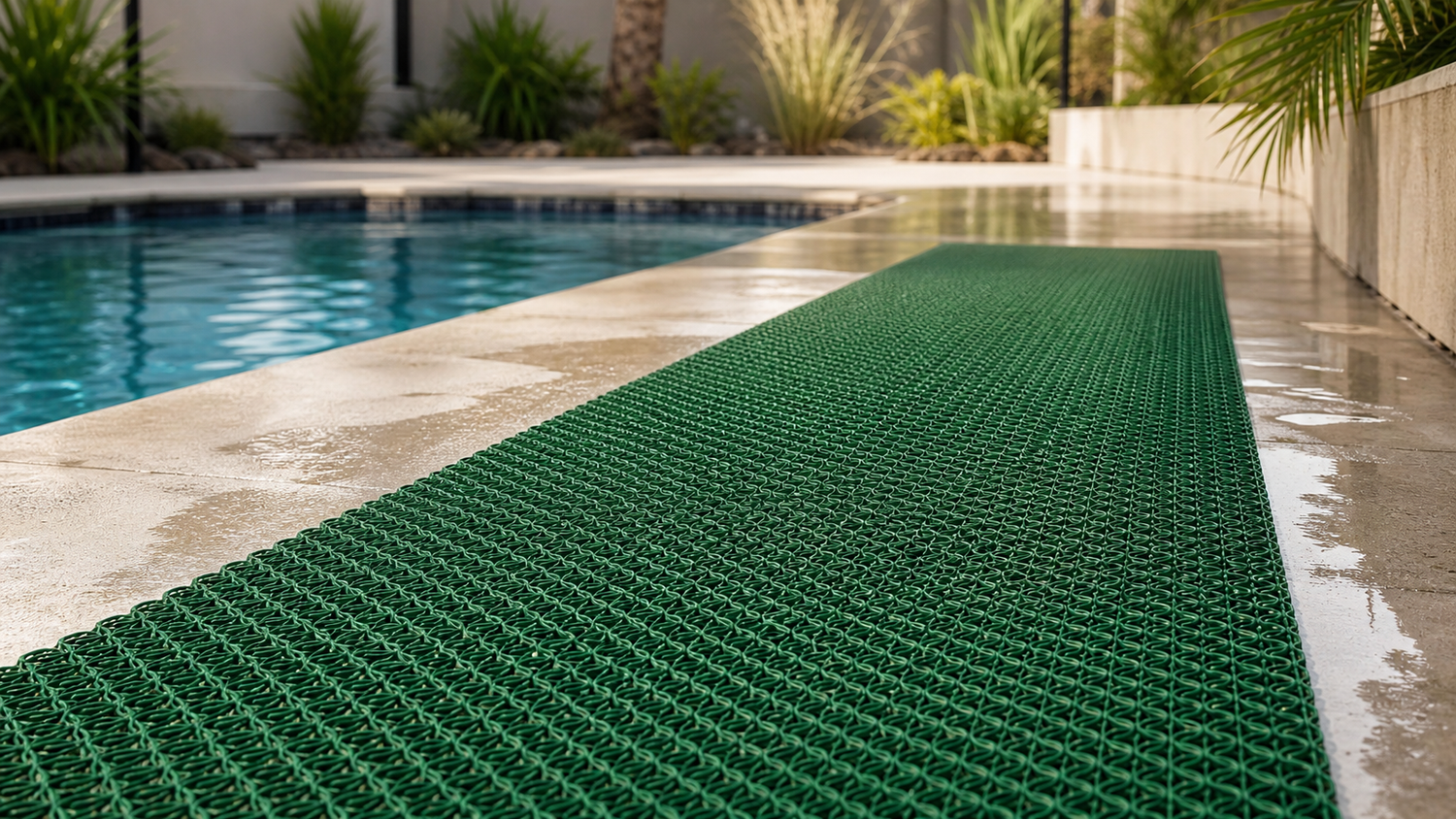
Wet floors are one of those problems people often ignore until they become a daily frustration. A pool deck stays damp long after everyone has gone inside. A bathroom floor collects water outside the shower. A balcony gets slippery after rain. A garage work area turns messy after washing tools, pets, or equipment. In restaurants, spas, and commercial kitchens, moisture is simply part of the environment.
The issue is not only water. It is what water does to a surface. It spreads dirt, slows down cleanup, makes hard flooring uncomfortable, and can reduce traction underfoot. In busy spaces, the floor needs to do more than look clean. It needs to drain, dry, support movement, and hold up to repeated use.
That is why many homeowners and business owners look for a drainage mat solution. The right mat creates a raised surface above moisture, gives water a path to move away, and makes wet areas easier to maintain.
Why Wet Floors Become a Bigger Problem Over Time
A little water on the floor may not seem serious at first. But when the same spot gets wet every day, small problems start to add up.
In outdoor areas, standing water can bring dirt, leaves, and grit into walkways. Around pools, it can make bare feet feel less secure. In garages and workspaces, water mixed with dust or cleaning residue creates a surface that is harder to keep clean. In restaurants and commercial areas, employees may stand on hard, damp floors for hours, which can be uncomfortable and inefficient.
Organizations such as OSHA discuss the importance of safer walking-working surfaces, especially where floor conditions can create hazards. While no single mat replaces regular cleaning or proper safety procedures, improving drainage is a practical step toward a better floor setup.
The Goal: Move Water Away From the Walking Surface
The best solution for wet flooring is not always to cover the area completely. In many cases, the smarter approach is to lift the walking surface slightly above the water and allow moisture to pass through.
That is where an open-mesh PVC drainage mat works well. Instead of trapping water on top, the structure helps liquid move downward and away from the footpath. This keeps the top surface more usable while still allowing the area underneath to be rinsed or cleaned.
A drainage mat is especially useful in places where water is expected, not accidental. Think pool decks, outdoor showers, patios, balconies, pet wash areas, spa rooms, restaurant prep areas, and garages.
What to Look For in a Drainage Mat
Not all floor mats are designed for wet environments. A standard rug or solid rubber mat can hold moisture, curl at the edges, or become difficult to clean. For wet spaces, the material and structure matter.
A good drainage mat should have an open design for water flow, enough texture for better footing, a flexible but durable material, and a surface that can be rinsed clean. It should also be easy to cut or size for the actual space, because wet areas rarely come in perfect dimensions.
PVC is a practical material for this type of use because it is durable, flexible, and suitable for repeated exposure to moisture. A 5 mm thickness gives the mat enough structure without making it feel bulky.

Common Areas Where Drainage Mats Help
Around pools, a drainage mat can make walkways feel more comfortable and organized. Instead of stepping directly onto wet concrete or tile, people have a textured surface where water can pass through.
In bathrooms or shower-adjacent spaces, drainage mats help separate feet from puddled water. This is useful in home bathrooms, locker rooms, sauna areas, and spa environments.
On patios and balconies, they can help with rainwater, plant watering, and outdoor foot traffic. In garages, they work well near utility sinks, hoses, washing areas, and workstations. In restaurant or commercial kitchen settings, drainage mats can help improve comfort where employees stand for long periods.
The same logic applies to pet areas. Any space used for washing, feeding, or outdoor pet traffic benefits from a surface that drains quickly and rinses easily.
Comfort Matters Too
People often think about drainage first, but comfort is also important. Hard floors become tiring when someone has to stand in the same place for a long time. That is common in kitchens, garages, workshops, service counters, and commercial prep areas.
A flexible PVC mat can provide a more forgiving surface than bare concrete, tile, or stone. This anti-fatigue effect is subtle, but it matters in daily use. A floor that drains well and feels better underfoot is easier to live with.
Easy Cleaning Should Be Part of the Decision
A wet-area mat should never make cleaning harder. If dirt, water, or debris gets trapped, the mat becomes another maintenance problem.
Open drainage mats are useful because they can be lifted, rinsed, and returned to place. Water flows through the surface instead of pooling on top. For residential spaces, that means faster cleanup after rain, pool use, or pet washing. For commercial spaces, it supports a more manageable cleaning routine.
The Centers for Disease Control and Prevention has also published guidance on preventing slips, trips, and falls in retail and work environments, where spills and floor conditions are common concerns. Better floor planning is one part of reducing day-to-day risk.
Fit the Mat to the Space, Not the Other Way Around
One of the most common mistakes is buying a mat based only on a standard size. Wet areas usually need a more specific fit.
Before choosing a mat, measure the exact walking path or wet zone. Look at where water collects, where people step most often, and where the mat might need to be trimmed. A narrow balcony may need a long strip. A poolside area may need several sections. A garage or restaurant zone may require wider coverage.
LITA’s drainage mat options are available in 1–4 ft widths and can be cut to fit. For larger installations, sizes can go up to 4 × 100 ft. That flexibility makes it easier to handle both small home projects and larger commercial areas.
Choosing a Color
Color is not only about style. It also affects how the mat blends into the surrounding space.
Green works naturally in outdoor areas, pool zones, garden walkways, patios, and pet spaces. It pairs well with grass, plants, and backyard surfaces. Gray is more neutral and often fits garages, bathrooms, restaurants, spas, balconies, and modern utility areas.
Both colors are available in the drainage mat collection, including green and gray options.
A Practical Detail for Outdoor Projects
If you are already improving an outdoor area, drainage should be part of the plan from the beginning. Many people focus on the main surface first, such as decking, tile, concrete, or artificial grass, then realize later that transition areas still need attention.
A drainage mat can help in those practical zones: near the pool ladder, beside an outdoor shower, around a pet rinse station, next to a hose, or along a damp walkway. It does not need to cover the entire outdoor space. It simply needs to solve the spots where water and foot traffic meet.
Final Thought
Wet floors are not always avoidable, but they can be managed better. The key is to choose a surface that lets water move, supports steady footing, feels comfortable, and cleans without extra work.
For pools, patios, bathrooms, garages, restaurants, saunas, spas, and pet areas, a PVC drainage mat is a simple upgrade that solves a real everyday problem. It helps turn damp, awkward floor zones into cleaner, more usable spaces.

Leave a comment
This site is protected by hCaptcha and the hCaptcha Privacy Policy and Terms of Service apply.