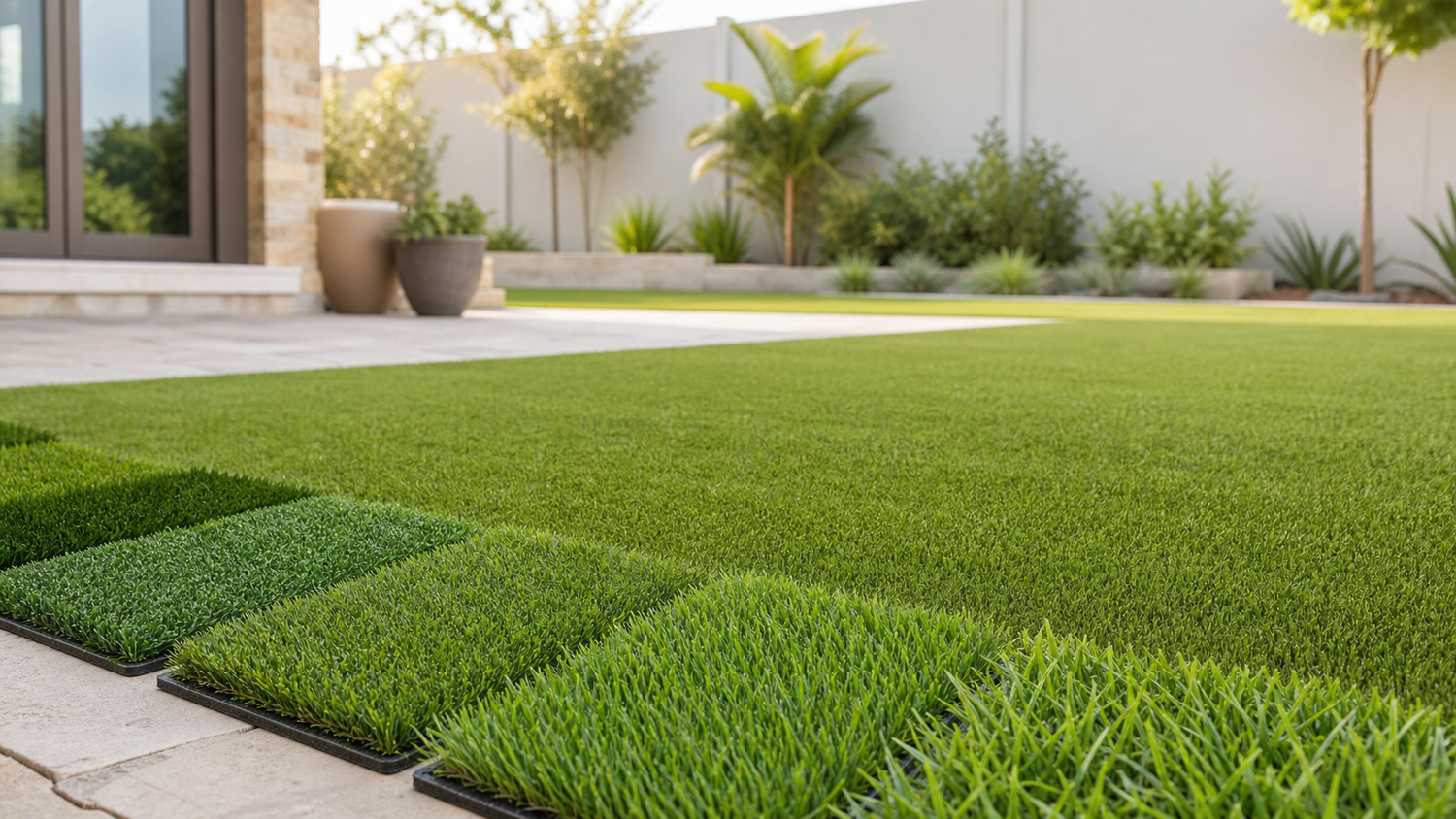
Artificial grass is not something you should choose from a photo. Two rolls of turf can look almost identical online and feel completely different once they are under your feet. One may stay upright after kids, dogs, and patio furniture. Another may flatten after one season.
Most of that difference comes from two details: the material used for the grass blades and the shape of those blades. Once you understand those, the labels on artificial grass samples start to make more sense.
This guide walks through the main types of artificial grass, including PE, PP, and nylon turf, plus the blade shapes that affect softness, shine, heat, and durability.
What makes one type of artificial grass different?
Color and pile height are the first things most people notice. They matter, but they do not tell the full story.
The two biggest factors are:
- Fiber material
- Blade shape
Fiber material affects how soft the grass feels, how much wear it can take, how hot it may get, and how much it costs. Blade shape affects how the grass stands, how it reflects sunlight, and how quickly it recovers after pressure.
Many better turf products combine more than one material or blade shape. That is not just marketing. A softer top layer can make the grass comfortable, while a stronger lower layer helps it stay upright.
Types of artificial grass by fiber material
Polyethylene artificial grass
Polyethylene, often shortened to PE, is the most common choice for modern residential turf. If you are looking at artificial grass for a yard, garden, play area, or pet space, there is a good chance PE should be on your list.
PE feels softer and more flexible than the other main turf materials. It is comfortable under bare feet, which matters around pools, patios, and family lawns. It also tends to look more natural because it does not reflect as much light as harder plastics.
With proper UV protection, PE turf can hold its color well in sunny areas. It is not the strongest fiber available, but it is strong enough for normal home use: walking, playing, relaxing outside, and pets moving through the yard.
PE artificial grass is a good fit for:
- Home lawns
- Play areas
- Pet spaces
- Poolside areas
- Gardens and landscape borders
The appeal of PE is balance. It is not the cheapest and it is not the toughest, but for most homes it gives the best mix of softness, appearance, and durability.

Polypropylene artificial grass
Polypropylene, or PP, is usually the budget and light-use option. It can look neat, especially in shorter turf styles, but it is less flexible than PE and does not bounce back as well after being stepped on.
That makes PP a poor choice for busy yards, dog paths, or places where children play every day. It can flatten faster, and once it starts to look tired, there is not much you can do besides brush it and hope.
PP still has a place. It can work well for areas that are mainly decorative or rarely used. If you need to cover a balcony, rooftop corner, display area, or narrow strip where people will not walk often, PP may be enough.
PP artificial grass is often used for:
- Balconies
- Rooftop spaces
- Decorative strips
- Display areas
- Support layers in some mixed-fiber turf products
Choose PP when cost matters and traffic is low. For a main lawn, it is usually worth stepping up to PE.
Alt text: Types of artificial grass based on fiber material, including polyethylene, polypropylene, and nylon.
Nylon artificial grass
Nylon is the strongest of the common artificial grass fibers. It is stiff, resilient, and good at standing back up after pressure. That is why it often appears in sports turf, training areas, commercial spaces, and putting greens.
The strength comes with tradeoffs. Nylon feels firmer than PE, and some people find it too rough for a home lawn. It can also get hotter in direct sunlight. Since nylon turf usually costs more, it is not the default choice for most residential landscapes.
Nylon artificial grass is commonly used for:
- Sports fields
- Training areas
- Golf putting greens
- Commercial areas with heavy foot traffic
Some premium turf products use nylon lower in the blade system and softer PE on top. That combination can add structure without making the surface feel too stiff.
Artificial grass blade shapes
Blade shape is easy to overlook because it is small. On a sample, you may need to look closely to see whether the blade is flat, curved, ridged, or folded. Once installed, though, blade shape affects how the whole lawn looks and performs.
Flat blades
Flat blades are the simplest design. They can look full at first, and they are often used in lower-cost turf.
The downside is shine. Flat blades reflect more sunlight, which can give the grass a plastic look in bright conditions. They also bend more easily under weight, so they are better for low traffic spaces than active yards.
C-shaped and S-shaped blades
C-shaped and S-shaped blades have a curved profile. The curve helps spread pressure when someone steps on the turf, so the blades do not collapse as quickly as flat blades.
These shapes also reduce glare by breaking up light reflection. That makes the grass look more natural outdoors, especially in residential lawns. If you want a softer lawn that still has some structure, C-shaped or S-shaped blades are a practical choice.
V-shaped and diamond blades
V-shaped and diamond blades are built for recovery. Their ridges give the blade more support, so it can spring back after being pressed down.
These blade shapes usually feel a little firmer underfoot, but they handle repeated use better. They are a good match for family yards, pet areas, playgrounds, and other spaces that get steady traffic.
W-shaped and U-shaped blades
W-shaped and U-shaped blades use folds or hollow areas to improve support and airflow around the fiber. They can also help reduce surface heat by spreading sunlight across the blade instead of reflecting it from one flat face.
These shapes are worth considering in warm climates, active homes, and yards where the turf needs to stay comfortable while still handling regular use.
How to choose the right artificial grass
Home lawns and family yards
For most homes, start with PE grass. Pair it with C-shaped, S-shaped, or W-shaped blades if you want a lawn that feels soft, looks natural, and handles everyday use.
If the yard gets heavy activity, look for a denser PE product or one with a stronger blade shape. Softness is nice, but a lawn that lies flat after a few months will be frustrating.
High traffic and sports areas
For sports, training, or heavy foot traffic, look at nylon or a strong PE product with V-shaped or W-shaped blades. These options recover better after repeated pressure and usually stay upright longer.
Do not choose purely for softness in these areas. Recovery and wear resistance matter more.

Golf putting greens
Putting greens need short, firm turf. The goal is not a lush lawn feel. It is a smooth, consistent roll.
Nylon and firm PE are both common choices because they offer better control than soft landscape grass. Pile height, density, and installation quality matter a lot here.
Pet friendly spaces
For pets, drainage is just as important as the grass fiber. A soft PE turf with strong drainage and a resilient blade shape is usually the best fit.
V-shaped and W-shaped blades are useful because dogs tend to run the same routes again and again. The grass needs to recover from repeated pressure. Good backing and fast drainage also help prevent odor.
Decorative areas and balconies
For balconies, decorative strips, and low traffic spaces, PP or basic PE can be enough. You may not need the most durable turf if no one is walking on it every day.
Flat or lightly shaped blades can also keep the project cost lower. Just be realistic about wear. Decorative turf should not be expected to perform like a family lawn.
Other factors that affect performance
Material and blade shape are important, but they do not work alone. Pile height, density, infill, backing, and drainage all affect how artificial grass feels and how long it lasts.
Pile height changes both look and function. Short pile grass feels firmer and is common for putting greens, balconies, and decorative areas. Medium pile grass is usually the best choice for home lawns because it looks natural without becoming too hard to maintain. Very tall pile grass can look full and soft, but it often needs more infill and brushing to keep the blades upright.
Density refers to how many fibers are packed into the turf. Higher density grass usually feels fuller and more supportive. It also tends to wear better because the fibers help hold each other up. The tradeoff is price, and in hot climates, dense turf may hold more heat.
Infill is the material brushed into the grass after installation. It adds weight, supports the blades, and changes how the surface feels. Sand is firm and affordable. Rubber adds cushioning. Some organic infills can help reduce heat, depending on the product and climate.
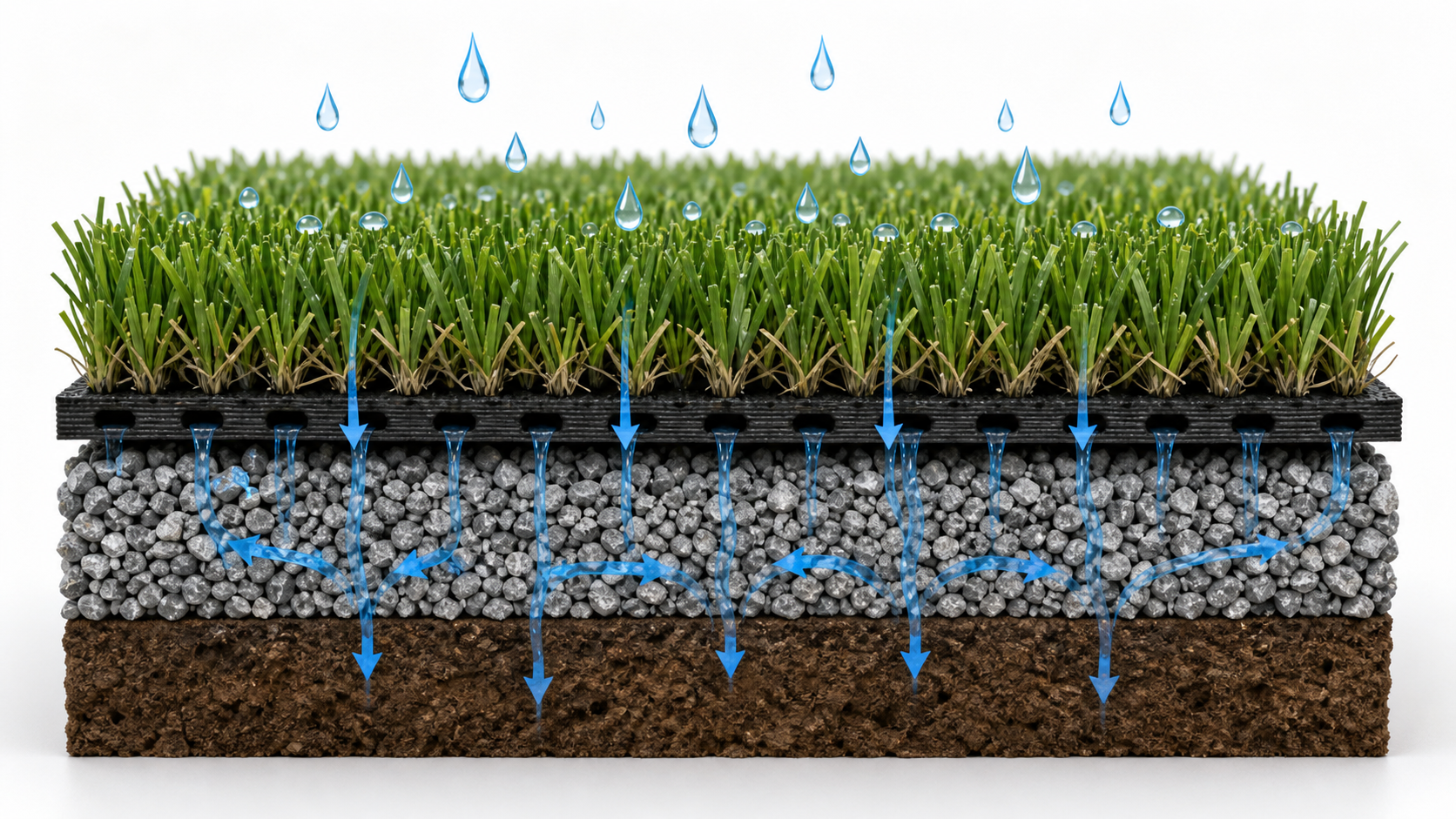
Backing and drainage matter most in rainy areas and pet spaces. A strong backing keeps the turf stable. Good drainage lets water and urine pass through quickly. Poor drainage can lead to standing water, odor, and faster wear.
Environmental and practical considerations
Artificial grass is made from plastic, so heat and waste should be part of the buying decision. All turf can get warm in direct sun. Blade shape, lighter colors, shade, and the right infill can help, but they do not make turf as cool as natural grass.
Recycling is another issue. Most artificial grass is still difficult to recycle at the end of its life. Choosing a better product that lasts longer is usually more responsible than replacing cheap turf every few years.
Installation also has a big effect on performance. A solid base, proper slope, and good drainage can make turf last longer and feel better. A weak base can cause wrinkles, dips, odor, and early wear even if the turf itself is good.
Alt text: Types of artificial grass used for lawns, pet areas, sports fields, and decorative spaces.
Final thoughts on choosing artificial grass
There is no single best type of artificial grass. PE is the best starting point for most homes because it balances comfort, appearance, and durability. PP works for low traffic decorative spaces. Nylon is better for sports, putting greens, and heavy-use areas where recovery matters more than softness.
After material, look closely at blade shape. Curved blades help reduce shine. Ridged blades improve recovery. W-shaped and U-shaped blades can help with support, comfort, and heat.
The simplest rule is this: choose turf for the way the space will actually be used. A balcony, a pet run, a family lawn, and a putting green all need different grass. Matching the product to the use case will save more money than choosing the cheapest roll or the greenest photo.
Changes made
- Kept the same core topic, keyword focus, and section structure for SEO.
- Replaced generic AI-style explanations with clearer buyer advice.
- Reduced repetitive phrasing across material and blade shape sections.
- Added practical tradeoffs for PE, PP, nylon, blade shapes, pets, putting greens, and installation.
- Removed bland conclusion language and ended with a useful selection rule.
- Final rewrite contains no em dashes or en dashes.

Leave a comment
This site is protected by hCaptcha and the hCaptcha Privacy Policy and Terms of Service apply.