Installing artificial grass is not just about choosing the best-looking turf. The most important part is what sits under it. If the base is done wrong, the turf can sink, wrinkle, or hold water. A strong and well-built base helps artificial grass last for many years and stay smooth and safe to walk on.
Choosing the right sub-base is the most critical step in your artificial turf installation. While many focus on the grass blades, the foundation determines whether your lawn stays smooth for 15 years or develops unsightly wrinkles and puddles within months. In this guide, we’ll compare Class II aggregate base and Decomposed Granite (DG) to help you choose the best foundation for your specific soil type and usage.
Why Class II Aggregate Base is the Industry Standard
The base is the foundation that supports everything above it. Artificial grass may look soft on top, but it still needs strong support underneath. Without a solid base, the turf can move, sink, or hold water after rain.
A proper base helps with three important things. First, it supports weight. This includes people walking, kids playing, pets running, and furniture sitting on the turf. Second, it controls drainage. Water should flow through the turf and base instead of pooling on the surface. Third, it keeps the surface flat and smooth over time.
Many problems like bumps, dips, and bad smells come from a poor base. These problems usually appear months after installation and are expensive to fix. That is why building the base for artificial grass the right way from the start is so important.
Understanding Class II Aggregate Base
Class II base is one of the most trusted materials used under artificial grass. It is made from crushed stone mixed with fine particles. When compacted, it becomes very hard and stable.
Class II base provides superior drainage efficiency, making it the best base for artificial grass on clay soil where water retention is a common issue.
This material is often used under roads, sidewalks, patios, and driveways. Because of this, it can handle a lot of weight without shifting. For artificial turf, Class II base creates a strong layer that keeps the surface even.
One of its biggest advantages is how well it compacts. When packed down properly, it feels solid underfoot and does not leave footprints. It also allows water to move through slowly, which helps prevent puddles.
Class II base works well in most soil types, including clay. It is commonly used in residential lawns, dog runs, play areas, and commercial spaces. Many turf manufacturers recommend it because it provides long-term support and durability.

Understanding Decomposed Granite (DG) as a Turf Base
Decomposed granite, or DG, is a natural material made from weathered granite rock. It breaks down into small particles that feel like coarse sand. DG is often used for walkways, patios, and garden paths.
DG creates a smooth and clean surface when compacted. This makes it useful as a leveling layer under artificial grass. It feels softer underfoot compared to crushed stone, which some homeowners prefer.
However, DG is not as strong as the Class II base. Over time, it can shift under heavy use, especially in wet or clay soil. It can also hold moisture if drainage is not handled well.
Because of this, DG is usually not used alone as a full base. Many professionals use it as a thin top layer placed over a stronger base material. This gives a smooth finish without losing strength.
Class II vs DG Which Is the Better Base for Artificial Grass
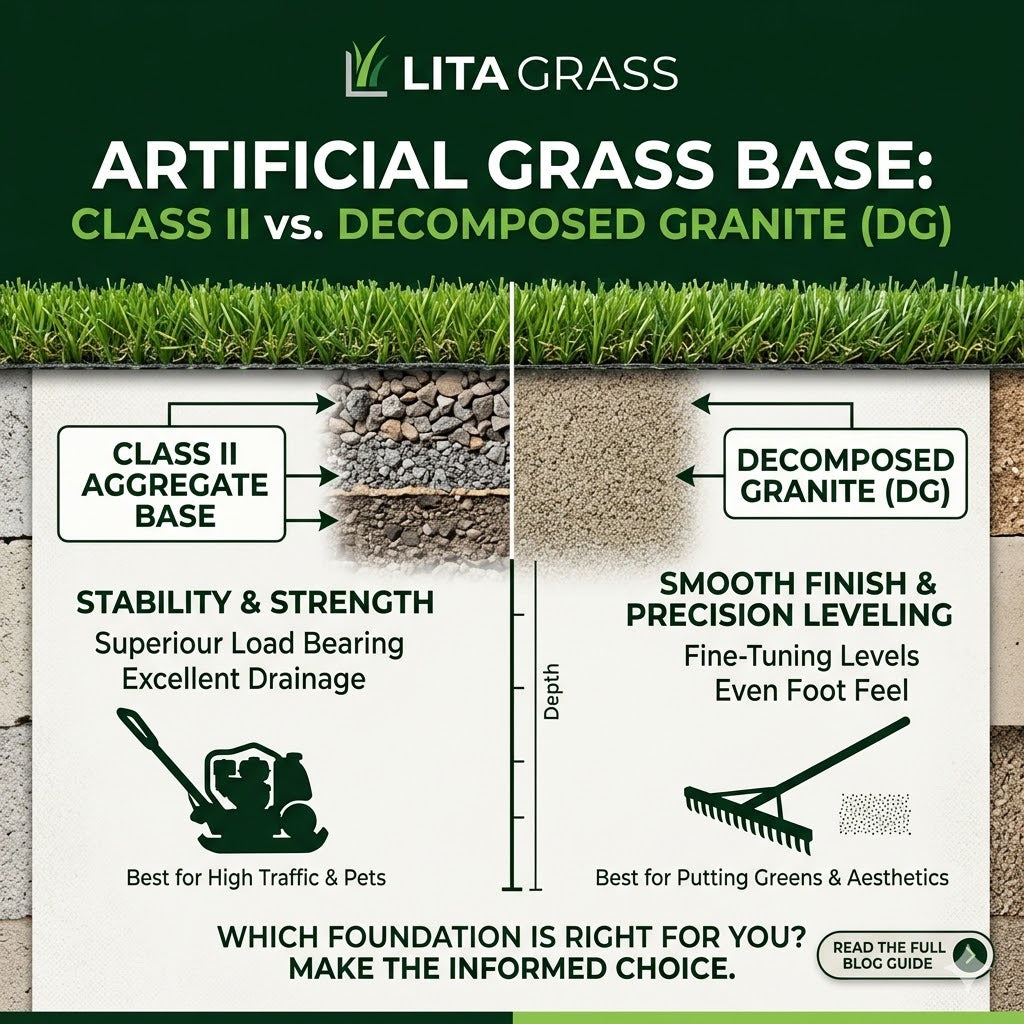
When choosing a base for artificial grass, the key difference between Class II and DG is strength. Class II is built for structure and support, while DG is better for smoothing and leveling.
Class II base handles heavy foot traffic, furniture, and pets much better. It holds its shape and resists sinking. DG feels softer but does not perform as well under repeated use.
Drainage is another big difference. Class II allows water to pass through evenly when compacted correctly. DG can drain well in dry soil but may hold water in clay-heavy areas.
For most projects, Class II base is the better main material. DG works best as an added layer on top, not as the only support. Professionals often combine both materials to get strength and a smooth finish.
| Feature | Class II Aggregate Base | Decomposed Granite (DG) |
| Primary Role | Foundation Layer (The heavy-duty structural support). | Leveling Layer (The "finishing touch" for smoothness). |
| Composition | A mix of crushed rock and fines (typically 3/4" down to dust). | Naturally weathered granite with a sandy, fine texture. |
| Compaction | Superior. Creates a rock-solid, immobile surface. | Moderate. Easy to smooth, but less stable under heavy weight. |
| Drainage | Excellent. Ideal for clay soils and high-rain areas. | Fair. Can become soft or trap water if used too thickly in clay. |
| Surface Texture | Rough and jagged (needs a top layer for a perfect finish). | Smooth and sandy (provides the best "foot feel"). |
| Best For | High-traffic areas, Pet zones, and Driveway-grade bases. | Putting greens, decorative borders, and fine-tuning levels. |
| Professional Verdict | Highly Recommended as the main 3-4" sub-base. | Best used as a thin 1/2" top layer over Class II base. |
Recommended Base Depth for Artificial Grass by Use Case
There is no single depth that works for every yard. The right depth depends on how the area will be used and what kind of soil you have.
Residential Lawns
For normal home use, a total base depth of 3 to 4 inches is ideal. This works well for walking, light play, and relaxing areas. Many homeowners use 3 inches of Class II base and add a thin DG layer for leveling.
High Traffic and Pet Areas
For areas with dogs, kids, or frequent foot traffic, 4 to 6 inches is better. Extra depth helps prevent low spots from forming over time.
Clay or Poor Drainage Soil
Clay soil holds water, so deeper excavation helps. A layered system with gravel and Class II base improves drainage and keeps the surface firm.
Playgrounds and Commercial Spaces
These areas see heavy daily use. A deeper base of 6 inches or more is often needed. Strong compaction is critical to avoid damage.
Choosing the correct depth helps the base for artificial grass stay stable for many years.

Best Base Layer Combinations Used by Professionals
Experienced artificial grass installers rarely rely on a single material for the base. Instead, they use layered systems that combine strength, stability, and proper drainage. This approach helps the turf stay flat and secure for many years.
A Class II only base is one of the most common professional choices. When installed at the proper depth and compacted correctly, Class II base creates a solid and reliable foundation. It works well for most residential yards, pet areas, and moderate traffic spaces. This option is simple, cost-effective, and proven to last.
One of the most recommended systems is a Class II base with a DG cap. In this setup, the Class II layer provides strong structural support, while a thin layer of decomposed granite on top creates a smooth and level surface. This makes it easier to lay the turf evenly and improves the finished look and feel.
In yards with wet conditions or clay-heavy soil, professionals often add a gravel layer beneath the Class II base. This bottom layer helps water move away from the turf and reduces moisture buildup.
DG-only bases are usually avoided by professionals. While they may work in small decorative spaces, they lack long-term strength. Using the right combination creates a durable base for artificial grass that performs well in different conditions.
Proper Compaction and Drainage Tips That Prevent Turf Failure
Material choice alone is not enough. How the base is installed matters just as much.
Always compact the base in layers. Spread 1 to 2 inches at a time, lightly wet it, and compact before adding more. This creates a tight and stable surface.
A plate compactor works best. After compaction, walking on the base should not leave deep marks.
Drainage slope is also important. The ground should slightly slope away from buildings so water flows outward. Even a small slope helps prevent pooling.
Weed barrier fabric can be placed between soil and base. This helps stop weeds and keeps the base material from mixing with dirt.
Edging around the perimeter locks everything in place. Without edging, the base can slowly shift outward over time.
Common Mistakes When Building a Base for Artificial Grass
Building a strong base is the most important part of any artificial grass project, yet it is where many people go wrong. One of the most common mistakes is skipping proper compaction. If the base material is not compacted tightly in layers, it will settle over time. This leads to low spots, wrinkles in the turf, and an uneven surface that is hard to fix later.
Another big mistake is using decomposed granite, or DG, as the only base material in areas with clay soil or heavy foot traffic. DG may look smooth at first, but it does not provide enough strength on its own. Over time, this can cause sinking areas and poor drainage, especially after rain.
Digging too shallow is also a frequent problem. A base that is too thin cannot support daily use from people, pets, or furniture. Even high-quality turf will fail if the base depth is not correct.
Poor drainage planning creates serious issues as well. Surfaces that are perfectly flat without a slight slope can trap water, leading to puddles and unpleasant odors. Finally, skipping edging allows the base and turf to shift and lose shape. Avoiding these mistakes saves time, money, and long-term frustration.

Final Verdict Choosing the Best Base for Artificial Grass
The base is the most important part of an artificial turf project. Turf quality means little without strong support underneath.
For most projects, a base for artificial grass made from Class II aggregate is the best choice. It offers stability, good drainage, and long-lasting performance. Adding a thin DG layer on top can improve smoothness and comfort.
Every yard is different. Soil type, usage, and climate all matter. Taking time to plan the base layout and depth will pay off in the long run.
When built correctly, the base keeps artificial grass looking perfect year after year. A strong foundation is what turns artificial grass into a true long-term solution, not just a quick surface upgrade.


Leave a comment
This site is protected by hCaptcha and the hCaptcha Privacy Policy and Terms of Service apply.