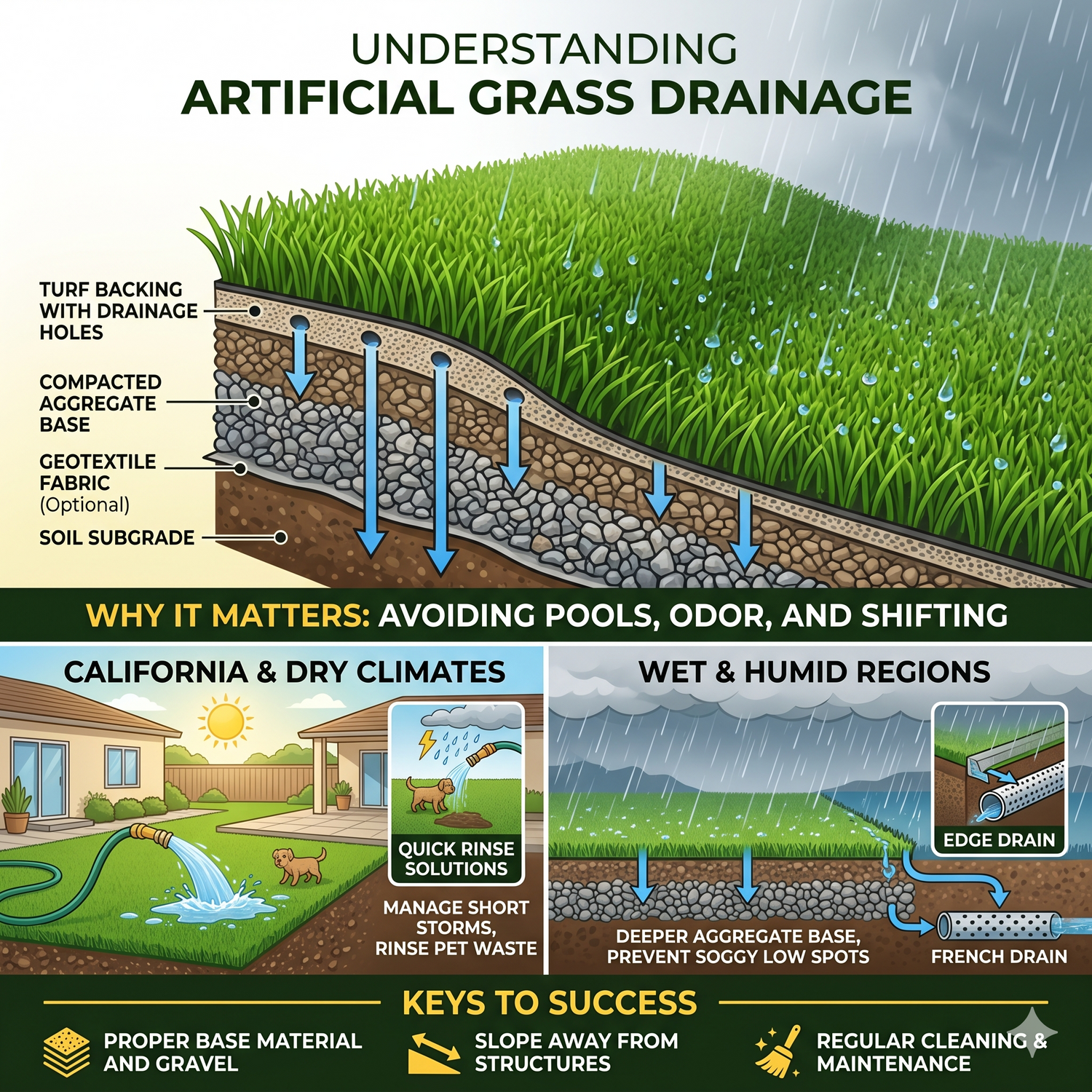
Artificial grass drainage is one of the biggest reasons a turf project succeeds or fails. The grass may look good on top, but water still needs a clear path through the backing, base, and soil below.
If drainage is poor, the lawn can hold puddles, smell bad, feel uneven, or move after heavy rain. This guide explains how drainage holes, base material, slope, and cleaning habits work together so your artificial lawn stays dry and easy to maintain.
Why Artificial Grass Drainage Matters
Artificial grass does not absorb water like natural soil and live grass. Water must pass through the turf backing and move into the prepared base below. A good drainage system helps prevent standing water after rain, keeps pet areas easier to rinse, and protects the base from soft spots.
Drainage is especially important for dog runs, shaded yards, clay soil, rooftops, balconies, and areas that get regular washing.
Check the Turf Backing First
The backing is the layer that holds the grass fibers in place. For outdoor use, it should allow water to pass through evenly. Many turf products use drainage holes across the backing. Some use a fully permeable backing that lets water flow through the entire surface.
When comparing turf, flip the sample over and look for clean, even drainage openings. If the backing looks sealed or the holes are too far apart, water may move slowly.
What to Look For in Drainage-Friendly Turf
- Even drainage holes: water should pass through the backing without pooling on top.
- Medium pile height: it is easier to rinse than very tall grass and still feels comfortable.
- Strong backing: the backing should feel firm and stable, not thin or easy to tear.
- Good density: fuller turf looks better, but it should still clean and drain well.
The Base Controls Most Drainage Problems
Even good turf can fail if the base below it is not prepared correctly. The base should be compacted, stable, and slightly sloped so water can move away from buildings and low spots.
For many residential yards, a compacted aggregate base is a better choice than loose soil alone. In wet or clay-heavy areas, extra base depth and better slope planning are often needed.
Regional Case: California Yards

In many California yards, artificial grass is chosen to reduce mowing and routine irrigation. Drainage can still become a problem because rain often arrives in short, heavy bursts, and some homes have compacted soil or clay pockets under the landscape.
For a California-style installation, keep a slight slope away from the house, use a compacted Class II road base or similar aggregate where appropriate, and avoid trapping water against concrete, stucco walls, or low planter borders. Decomposed granite can look natural around turf edges, but it should not replace a stable drainage base under the main lawn unless the installer has confirmed it can move water properly.
Pet owners in hot inland areas should also rinse turf more often during dry weather. The goal is not heavy watering; it is a quick rinse that moves urine and dust through the backing before odor builds up.
Regional Case: Wet or Humid Areas

In wet regions such as the Pacific Northwest, the Gulf Coast, parts of the Southeast, or any yard with frequent storms, the main risk is not drought. It is repeated moisture sitting in the base, along fence lines, or next to patios.
For these areas, plan for a deeper aggregate base, correct low spots before turf is laid, and consider a perimeter drain, French drain, or gravel border where water naturally collects. If the turf is installed over concrete, make sure the slab has slope and a clear outlet. A flat slab can hold water under the turf even when the grass surface looks clean.
Wet-climate lawns also need regular debris removal. Leaves, mud, and organic matter can block drainage holes and hold moisture, so brushing and rinsing are part of keeping the system open.
Simple Drainage Test Before Installation
Before installing a full lawn, test your turf sample at home. Place it over a bucket or sink and slowly pour water over the surface. The water should move through quickly. Then check the backing to see where the water exits.
You can also pour water on the prepared base before laying turf. If water sits in one area, fix the slope or base before moving forward.
Best Product Match
For a yard, patio, or pet-friendly area, start by reviewing LITA 1.38 inch ECO Artificial Grass. You can also compare more options in Installation Guide before choosing the right pile height, density, and backing for your space.
Cleaning Tips That Help Drainage
Drainage can slow down when dust, leaves, mud, or pet waste builds up in the turf. Rinse high-use areas regularly, remove debris with a leaf blower or soft rake, and brush the fibers to keep the surface open.
For pet areas, rinse more often and use turf-safe cleaners. Avoid harsh chemicals that can damage backing or leave residue. If odors keep coming back, the problem may be trapped waste in the infill or base, not just the grass surface.
When Artificial Grass Makes Sense
Artificial grass is strongest when you want a clean, green surface without mowing, mud, or constant watering. In dry climates, it can also reduce outdoor water use. For broader water-saving context, review EPA WaterSense outdoor water tips.
Artificial Grass Drainage Checklist
- Check the backing for even drainage holes.
- Test a sample with water before buying.
- Build a compacted base that does not hold puddles.
- Add a slight slope away from buildings, patios, and fence lines.
- In California or dry climates, plan for heavy short storms and pet rinsing, not only drought.
- In wet regions, fix low spots and consider edge drains before the turf goes down.
- Use proper accessories to secure edges and seams.
- Rinse and brush the lawn regularly after installation.
FAQ
Does artificial grass need drainage holes?
Yes, outdoor artificial grass should allow water to pass through the backing. Drainage holes or permeable backing help prevent pooling and odor.
Why does my artificial grass smell after rain?
Odor can come from poor drainage, pet waste, dirty infill, or a base that holds moisture. Rinsing helps, but repeated odor may mean the base needs attention.
Can artificial grass drain on concrete?
Yes, but the concrete needs slope and a clear exit path for water. If water has nowhere to go, it can sit under the turf.
Is drainage different in California?
Yes. California projects often focus on water savings, but drainage still matters for short storms, pet rinsing, compacted soil, and turf edges near concrete or walls.
What should I do in a very wet region?
Use a stable base, correct low spots, keep edges open, and consider a perimeter or French drain where water naturally collects.

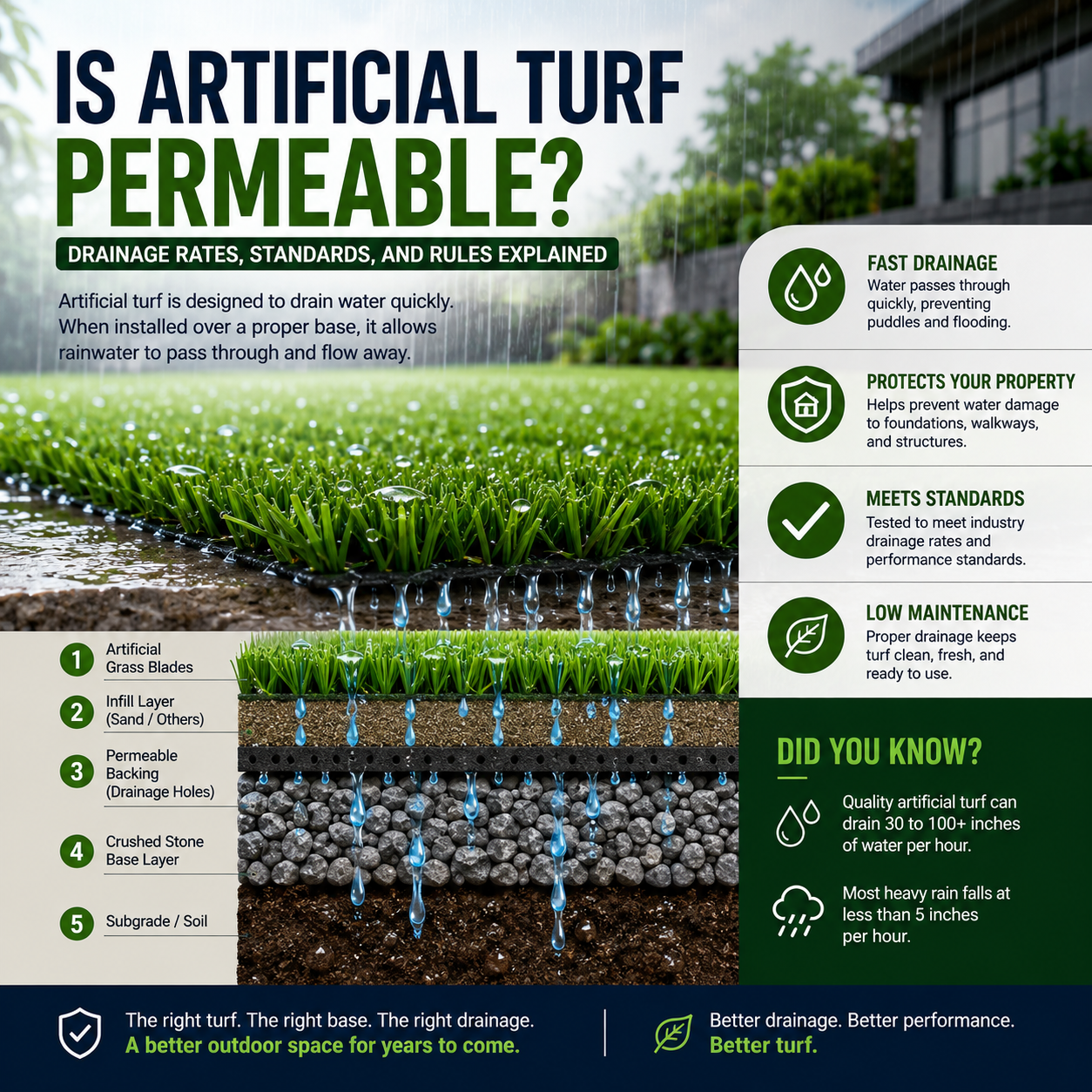

Leave a comment
This site is protected by hCaptcha and the hCaptcha Privacy Policy and Terms of Service apply.