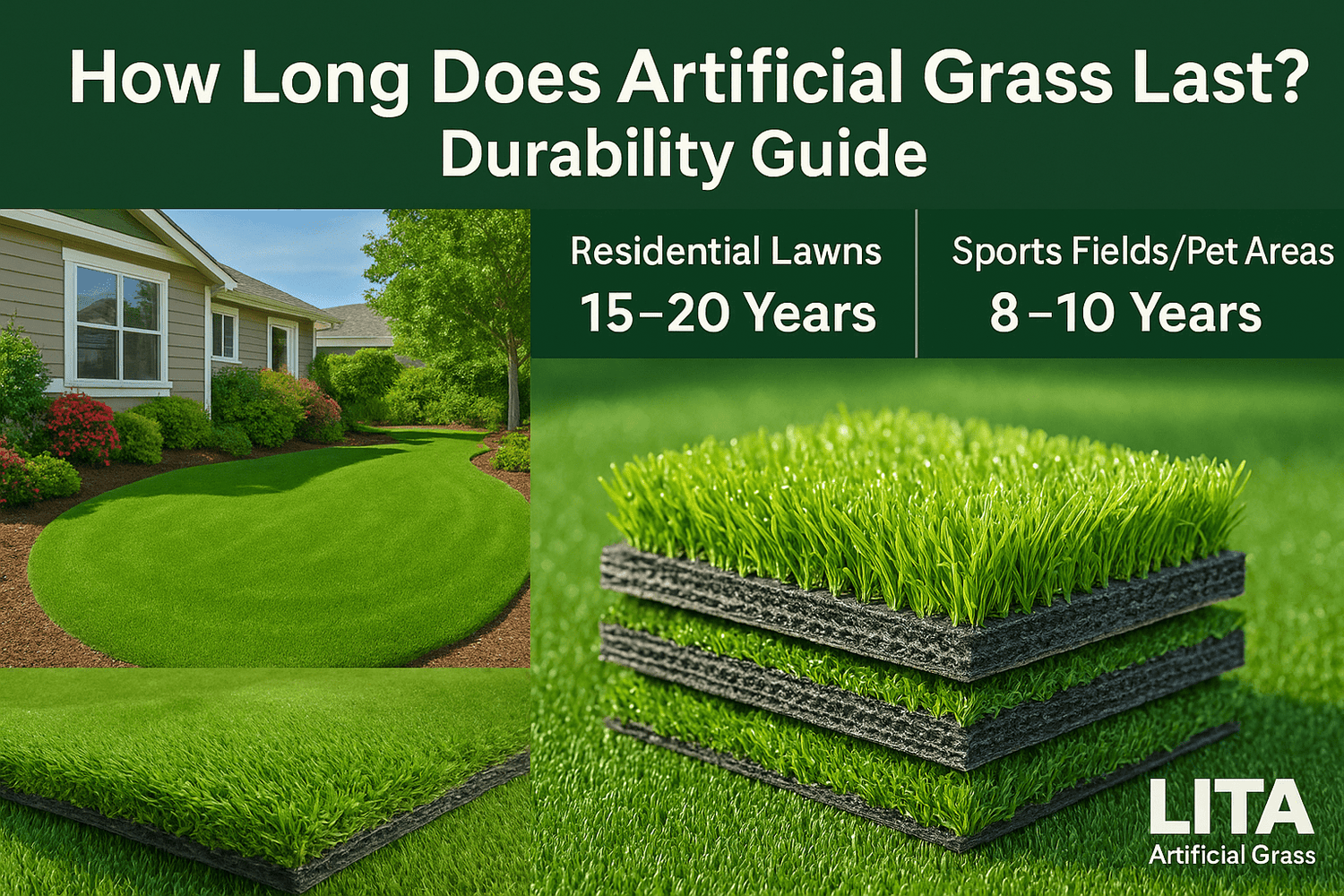
Synthetic turf typically lasts 8 to 15 years, depending on foot traffic, sun exposure, drainage, turf quality, and maintenance. Residential artificial grass can sometimes last longer with light use, while pet areas, playgrounds, and sports turf may wear faster because they handle more activity.
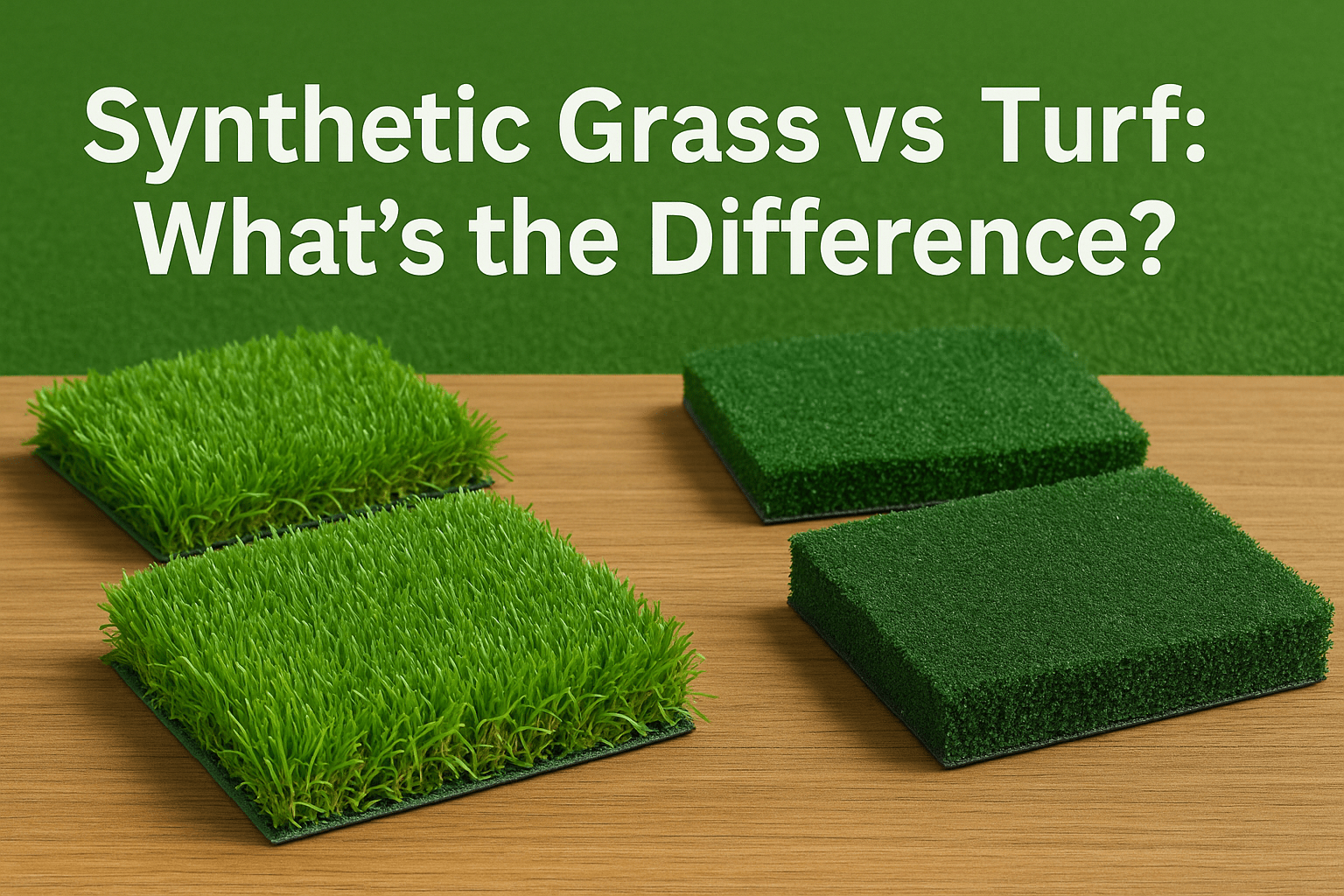
Artificial grass, synthetic turf, and artificial turf are often used to describe the same type of low-maintenance lawn surface. No matter which term you use, lifespan depends on choosing the right product, installing it correctly, and keeping the surface clean.
In this guide, you’ll learn how long synthetic turf lasts, what shortens artificial grass lifespan, when replacement makes sense, and how to help your turf stay clean, green, and usable for as long as possible.
How Long Does Synthetic Turf Last on Average?
Synthetic turf typically lasts 8 to 15 years, depending on foot traffic, sun exposure, drainage, pile quality, and maintenance. Residential artificial grass often lasts longer than high-traffic pet, playground, or sports turf. This guide explains what shortens turf lifespan, when replacement makes sense, and how to help artificial grass last longer.
If you use your lawn just for looks or light use, it can last up to 20 years. But in places with heavy use—like a dog run or sports field—it might wear out faster. Constant running, playing, or pet waste can cause more wear and tear.
Commercial and sports applications usually need replacement after 8 to 10 years. In comparison, a home synthetic lawn can easily last longer.
The Synthetic Turf Council says that most products come with a product warranty of 8 to 15 years. That gives you an idea of how long turf makers expect their grass to last. But with light maintenance like debris removal and fixing small problems, it can stay strong for many more years.

How Long Does Artificial Turf Last for Dogs?
Artificial turf for dogs usually lasts about 8 to 12 years, depending on the number of pets, how often they use the area, and how well urine is rinsed through the turf system.
Pet turf wears faster than decorative lawn turf because dogs run, dig, roll, and pee in the same areas repeatedly. Urine can also create odor if the turf does not drain well or if the base traps liquid below the surface.
For better long-term performance, dog owners should choose turf with strong backing, good drainage holes, pet-safe infill, and a base that allows liquid to move away from the surface. Regular rinsing and enzyme cleaner can also help extend turf lifespan.
What Shortens Artificial Grass Lifespan?
Artificial grass can last many years, but that depends on several things. Some lawns stay strong for 15–20 years. Others may wear out sooner. Let’s look at the main factors that affect how long your synthetic grass will last.
1. Quality of Materials
The type of material used to make artificial turf matters a lot. Most fake grass is made from nylon, polyethylene, or polypropylene.
- Nylon is the toughest. It holds its shape well and doesn’t flatten easily. It is best for high-use areas like sports fields or dog run spaces. But nylon can feel rough, and it costs more.
- Polyethylene is softer and looks more like real natural grass. It is great for home lawns and is still strong enough for regular use. This is the most popular option for synthetic lawns.
- Polypropylene is the cheapest, but it wears out the fastest. It’s not a good choice for areas with a lot of foot traffic or pet areas.
Besides the plastic type, you should also check if the turf has UV protection. Sunlight can cause damage over time. Turf made with UV-resistant materials or treated with UV inhibitors will fade less and last longer.
These special UV-resistant additives help protect the blades from cracking or losing color in the sun. Without this, UV damage and heat buildup will ruin your lawn faster, especially in sunny places like San Diego or under the strong Arizona sun.
2. Installation Quality
Even the best turf can wear out early if it’s not installed right. The installation process plays a huge role in the artificial grass lifespan.
If the ground is not prepared well, the grass may shift or wrinkle. A proper stone base is needed to keep the surface even and strong. If seams are not sealed well, they can come apart, making the grass look messy and unsafe.
A poor installation can also lead to drainage problems. Water may collect under the turf if drainage systems are not built correctly. This can cause mould, odours, or even damage the turf backing.
Drainage is one of the most important parts of artificial grass installation. If water or pet urine cannot move through the turf and base, the surface may develop odor, mold, soft spots, or backing damage. A stable base and proper slope help synthetic turf last longer.
That’s why it’s best to hire landscape professionals or a greenscape installer. They know how to lay the turf properly, add the right infill materials, and make sure everything drains well. While installation costs may be higher, proper setup means fewer repairs later and a longer-lasting lawn.

3. Climate and Sun Exposure
Weather and sunlight also affect how long synthetic turf will last. If you live in a hot, sunny place like San Diego or Texas, your turf may face more wear and tear.
Strong sun can break down weak plastics. This leads to fading, cracking, and loss of blade shape. That’s why UV-stabilized materials are important. They protect the grass from too much heat and light.
Also, rain and temperature changes can impact the turf. In wet places, water needs to pass through the grass easily. That’s where good drainage systems help. Without them, water may pool and ruin the turf from below.
To protect your lawn, choose turf that is made for your local climate. Ask your installer about UV resistance, drainage, and how the product handles heat. Good turf can handle different weather, but you need the right kind for your area.
4. Usage Intensity
How often you use your turf matters too. If your lawn sees a lot of foot traffic, it will wear out faster than one that’s mostly for show.
- Heavy use areas include sports applications, schools, and dog run areas. These need stronger turf and more care.
- At home, pet waste, children playing, and daily walking can also shorten the life expectancy of your turf.
For active homes, choose turf with thicker blades, stronger backing, and high shock absorbency. This will help it bounce back after use and stay looking fresh.
If your turf gets used a lot, it may also need more light maintenance. Areas with more activity will flatten or collect more dirt, which should be cleaned regularly.
So, think about how your family, pets, or customers will use the turf. High-traffic lawns need higher-quality grass.
5. Maintenance and Upkeep
People often say artificial turf lawns are “no-maintenance,” but that’s not fully true. They are low-maintenance, not zero.
To keep your turf lasting longer, follow some simple maintenance techniques:
- Rake or brush the blades often. This helps keep them upright and spreads out the turf infill. Fluffing prevents the grass from getting flat or stiff.
- Hose down your turf. This removes dust, pollen, and dirt. It’s important in dry areas where there’s no rain to help with cleaning.
- Clean pet messes quickly. Use water and mild soap to wash away pet waste. Some people also use odor-reducing infills to help with odor control in pet areas.
- Remove leaves or trash. Basic debris removal keeps your lawn clean and avoids damage over time.
- Fix small problems fast. If you see loose seams or ripped spots, get them repaired right away. Waiting too long can make it worse.
Artificial Grass Lifespan by Use Case
The lifespan of synthetic turf changes depending on where and how it’s used. Here’s a quick guide:
| Use Case | Expected Lifespan | Notes |
|---|---|---|
| Decorative front yard | 15-20 years | Light traffic usually helps turf last longer |
| Backyard lawn | 10-15 years | Depends on kids, pets, furniture, and sun exposure |
| Pet turf area | 8-12 years | Needs strong drainage and regular rinsing |
| Playground turf | 8-12 years | More activity means faster wear |
| Sports turf | 8-10 years | Heavy use often requires earlier replacement |
| Balcony or rooftop turf | 10-15 years | Drainage and heat exposure matter |
| Commercial landscaping | 10-15 years | Depends on foot traffic and cleaning schedule |
How to Know It’s Time to Replace Artificial Grass
Even though artificial turf is made to last, nothing lasts forever. Over time, you might notice signs that it’s time for a change.
Here are a few things to look for:
- If the grass blades stay flat even after brushing or raking, the turf may be too worn out.
- Fading or yellow spots that don’t go away could mean the turf has suffered UV damage.
- If some areas feel lumpy or saggy, the turf backing or infill materials may be breaking down.
- These can become tripping hazards and are often hard to fix once they appear.
- If your turf has a strong smell that doesn’t go away even after cleaning, especially in pet areas, it may be time for replacement.

How to Make Artificial Grass Last Longer
You can help artificial grass last longer with simple routine care. Remove leaves and debris before they break down into the turf. Rinse dusty or high-use areas with water. Brush flattened blades back upright when the surface starts to look matted.
For pet areas, rinse urine spots often and use an enzyme cleaner when odor appears. For high-traffic areas, check seams, edges, and infill levels so small problems do not turn into larger repairs.
Good maintenance does not need to be complicated, but it should be consistent. A few minutes of regular care can help synthetic turf stay cleaner, drain better, and keep its shape longer.
Is Artificial Grass Worth It for Long-Term Durability?
Many people ask if artificial turf is worth the money. The answer is yes, especially when you choose a reliable brand like LITA Grass, which is built to last and easy to care for.
At first, turf can be expensive to install. But it pays off over time. You don’t need to water, mow, or use fertilisers like you do with natural grass. That means lower bills, fewer tools, and more free time.
Most people get their return on investment (ROI) in 3 to 5 years. After that, all the savings go right into your pocket. Plus, your lawn stays green all year, even during droughts or water bans.
You’ll also use less water, which is great for areas with water restrictions or hot, dry weather. That helps with water conservation and lowers your water usage.
Synthetic Turf Lifespan FAQ
How long does synthetic turf last?
Synthetic turf usually lasts 8 to 15 years. Light-use residential lawns may last longer, while pet areas, playgrounds, and sports turf often wear faster because they receive more traffic.
How long does artificial grass last with dogs?
Artificial grass for dogs often lasts 8 to 12 years. Drainage, cleaning, pet-safe infill, and urine control have a major impact on how long pet turf stays fresh and usable.
Does artificial turf fade in the sun?
Artificial turf can fade over time, especially if it does not include UV protection. High-quality synthetic turf with UV-resistant materials usually keeps its color longer in sunny climates.
When should artificial grass be replaced?
Replace artificial grass when the blades stay flat, the backing breaks down, seams separate, drainage fails, odor does not go away, or the surface no longer looks clean and natural.
Conclusion
Synthetic turf can last many years when you choose the right product, install it correctly, and keep it clean. Most artificial grass lasts 8 to 15 years, while light-use residential lawns may last even longer.
If your turf will be used by dogs, kids, or heavy foot traffic, focus on drainage, backing strength, UV resistance, and routine maintenance. These details make the biggest difference in how long artificial grass looks good and performs well.
Ready to choose long-lasting turf for your yard? Explore LITA artificial grass products designed for lawns, pets, patios, and outdoor spaces.

Leave a comment
This site is protected by hCaptcha and the hCaptcha Privacy Policy and Terms of Service apply.