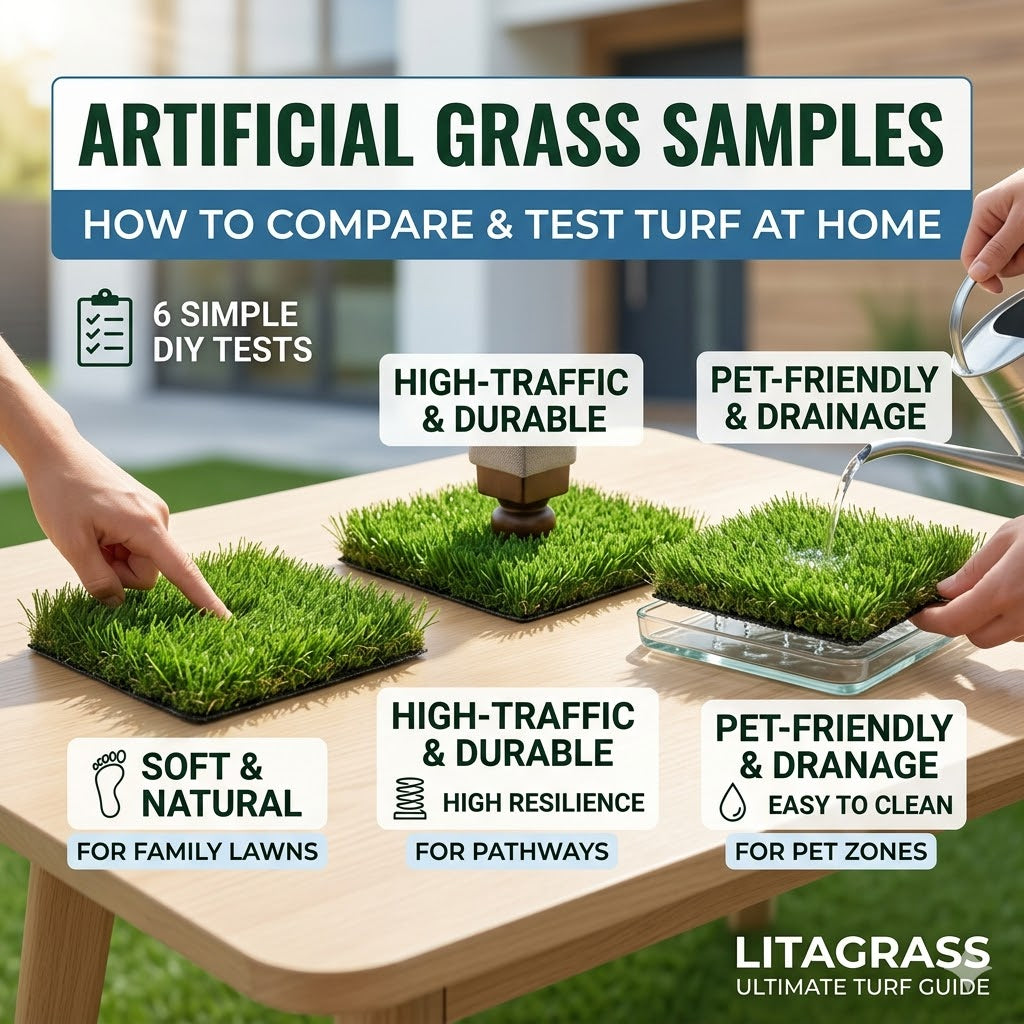
Buying artificial grass is a big decision. Once it is installed, changing it is hard and costly. Many people choose turf only by pictures or short showroom visits. This often leads to problems like fast flattening, bad drainage, strong heat, or grass that looks fake outdoors.
The safest way to choose the right turf is by ordering artificial grass samples and testing them at home. Samples let you see, feel, and test how the grass will perform in real life. This guide will show you exactly how to compare samples step by step so you can make a smart choice with confidence. Whether you are looking for the best artificial grass for dogs or a high-traffic family lawn, testing physical turf samples is the only way to ensure quality.
Why Artificial Grass Samples Matter More Than Product Photos
Photos can be misleading. Most turf photos are taken under perfect lighting and brushed to look full and fresh. Some are even edited. What looks great online may look shiny, flat, or thin in your yard.
Artificial grass samples let you see the real color, texture, and quality. You can check how the grass looks in sunlight, how soft it feels, and how it reacts to water and weight. Samples also help you notice small details like fiber strength, backing quality, and drainage holes.
When you test samples at home, you are not guessing. You are making a decision based on facts and real use.
Define Your Use Case Before Ordering Artificial Grass Samples
Before testing turf, you need to know how you will use it. Different uses need different grass types.
Ask yourself:
- Will kids play on it?
- Will pets use it daily?
- Is it for decoration only?
- Will there be heavy foot traffic?
- Is the area sunny or shaded?
A family lawn needs soft and safe grass. A dog area needs strong drainage and odor control. A walkway needs tough fibers that bounce back. Knowing your use helps you judge the samples correctly and avoid choosing the wrong style.

Key Specifications to Compare When Reviewing Artificial Grass Samples
When you receive your samples, check these main features. They tell you how the turf will perform over time.
Yarn Material: PE, PP, and Nylon
The yarn is the grass blade.
- Polyethylene (PE) is soft and natural looking. It is best for lawns and play areas.
- Polypropylene (PP) is stiffer. It is often used in the thatch layer.
- Nylon is very strong and springs back well. It is best for heavy traffic but can feel firmer.
Most good lawns use PE with some PP or nylon mixed in for support.
Pile Height: Blade Length Matters
Pile height is how tall the grass blades are.
- Short pile (15 to 20 mm) works for putting greens and paths.
- Medium pile (25 to 35 mm) is best for most lawns.
- Very tall pile (40 mm or more) looks lush but can flatten faster and hold dirt.
For easy care and good looks, medium pile works best for most homes.
Density, Face Weight, and Dtex Explained Simply
These three tell you how full and strong the grass is.
- Density means how many stitches are packed together. Higher density means fuller grass.
- Face weight shows how much yarn is used. Higher face weight usually means better quality.
- Dtex shows how thick the fibers are. Higher dtex means stronger blades.
When testing samples, spread the blades apart. If you see a lot of backing, the grass may feel thin over time.
Backing Quality and Drainage
The backing holds everything together.
- Good turf has strong backing that feels thick and solid.
- Drainage holes should be even and well spaced.
- Some turf uses fully permeable backing, which drains very fast.
Strong backing prevents tearing and helps the grass last longer, especially in wet areas.

How to Test Artificial Grass Samples at Home Step by Step
This is where samples truly make a difference. Testing at home shows how the grass will look and feel in real life, not just in photos. These simple tests do not need special tools and can save you from choosing the wrong turf.
Visual Realism Test
Start by placing the samples outdoors in direct sunlight. Lay them on the ground or on the surface where the grass will be installed. Step back a few feet and look at them from different angles. Good turf should look natural, not plastic.
Pay close attention to the color blend. High-quality grass usually has more than one shade of green, along with small brown fibers mixed in. This brown layer imitates real grass roots and helps the turf look real from a distance. If the sample looks shiny, flat, or very bright under the sun, it may look fake once installed.
Comfort Test
Next, test how the grass feels. Take off your shoes and walk on the samples. Kneel on them and even place your hands flat on the surface. The grass should feel soft, comfortable, and gentle on skin.
Rub the fibers between your fingers. If the blades feel stiff or scratchy, the turf may not be good for kids, pets, or relaxing areas. Grass that feels too hard when kneeling can become uncomfortable over time.
Resilience and Flattening Test
This test shows how well the grass holds up to weight. Place a heavy book, brick, or small weight on each sample. Leave it there for one to two hours.
After removing the weight, brush the grass upward using your hand. High-quality turf will bounce back and stand upright within a short time. If the blades stay bent or crushed, the grass may flatten quickly in busy areas.
Drainage Test
Drainage is very important, especially for rainy areas or pet use. Place the sample over a bowl, sink, or bucket. Slowly pour one cup of water over the surface.
The water should pass through quickly without pooling on top. Flip the sample over and check the backing. Look for evenly spaced drainage holes. Poor drainage can cause odors, puddles, and mildew.
Heat Test
On a warm, sunny day, place the samples outside for about 30 minutes. Carefully touch them with the back of your hand. Some turf becomes very hot in the sun.
Compare all samples and note which stays cooler. Lighter colors, shorter pile height, and open blade shapes often reduce heat buildup.
Cleaning and Shedding Test
Finally, check shedding and cleaning. Shake each sample over a dark surface. A few loose fibers are normal, but heavy shedding can be a problem. Rub some dirt or a small drink spill onto the grass and rinse with water. Good turf should clean easily and look the same after drying.
Special Testing Tips for Pet Owners
If you have dogs, testing is even more important. Artificial grass samples made for pets are different from regular lawn turf.
Look for:
- Medium pile height that is easy to clean.
- Fast drainage to prevent odor.
- Thick backing that resists digging.
- Fibers that stand up to claws.
You can pour lightly salted water to test how smells fade after drying. Ask sellers about pet-safe infill and approved cleaners. Good pet turf should be easy to rinse and stay fresh.
Matching Artificial Grass Samples to Real World Uses
Different areas need different grass types.
- Family lawns: Soft PE grass, medium pile, good density.
- High traffic paths: Shorter pile, high density, strong fibers.
- Balconies and roofs: Lightweight turf with good drainage.
- Sports areas: Short, dense turf with strong fibers.
- Pet areas: Drainage-focused backing and tough yarn.
Comparing artificial grass samples side by side makes these differences clear and helps you match turf to your space.
Common Red Flags to Watch for in Artificial Grass Samples
Be careful if you notice:
- Strong plastic or chemical smells.
- Very shiny or fake look in sunlight.
- Thin backing that bends easily.
- Big gaps between stitches.
- No clear product details or warranty info.
Good suppliers are clear about specs and answer questions without avoiding details.
How to Compare Artificial Grass Samples Side by Side
Comparing samples side by side makes choosing much easier. Start by placing all samples in the same outdoor area so they get the same sunlight and conditions. Using a simple chart can help keep things clear and organized.
Create a list and score each sample from 1 to 5 in key areas like comfort, appearance, bounce back, drainage, heat level, and ease of cleaning. Walk, kneel, and touch each sample before giving a score. Pour water over each one to compare drainage, and leave them in the sun to check heat.
As you test, write short notes like “softest,” “cooler in sun,” or “dries fast.” After scoring, patterns will appear. One or two samples usually perform better in most categories. This method removes guesswork and helps you choose grass based on real performance, not just looks or price.

Final Thoughts: Test First, Then Buy with Confidence
Choosing turf is not just about color or softness. Long-term comfort, drainage, and durability matter most. That is why testing artificial grass samples at home is the smartest step before buying.
Take your time. Test in sun and shade. Walk, kneel, pour water, and compare. When you choose based on real performance, your artificial lawn will look better, feel better, and last longer.
Testing first helps you avoid regret and enjoy your space for years to come.
-
Q: Can I get free artificial grass samples?
- A: Yes, most reputable suppliers like Litagrass offer free or low-cost sample packs so you can feel the texture and test the quality before committing.
-
Q: What should I look for in a turf sample for pets?
- A: Focus on drainage rate and anti-microbial backing to prevent odors.
-
Q: How do I know if the grass will look realistic?
- A: Take the sample outdoors. Check it under direct sunlight to ensure it doesn't have a "plastic-like" unnatural shine.


Leave a comment
This site is protected by hCaptcha and the hCaptcha Privacy Policy and Terms of Service apply.